A shipment is ready to move. The goods are too big for a standard container, too awkward to dismantle, or already mounted on wheels and ready to travel. That is the point where a shipper starts asking the right question. Not “what is the cheapest sea freight option on paper?”, but “what is the method that gets this cargo onto a vessel, through the port, and to the buyer without creating avoidable delay, damage, or compliance trouble?”
That is where roll on roll off shipping earns its place.
For many EU-UK and international movements, Ro-Ro is the most practical option for vehicles, trailers, agricultural equipment, construction machinery, and project cargo loaded onto specialist trailers. It removes crane lifts from the equation, shortens port handling, and gives operations teams a cleaner handover between road and sea. The basics are simple. The execution is not. Booking details, port cut-offs, customs data, inspections, and final-mile planning all matter.
Your Introduction to Roll On Roll Off Shipping
If you need to ship a tractor, a semi-trailer, a bus, a mobile crane, or a wheeled machine overseas, the first constraint is physical. Standard containers have fixed dimensions. Some cargo will not fit. Other cargo can fit only after partial dismantling, specialist packing, and extra labour at both ends.
Roll on roll off shipping solves that problem by letting cargo move as cargo already wants to move. It goes onto the vessel on wheels, or on a wheeled chassis such as a Mafi trailer, using the ship’s internal ramps and decks.
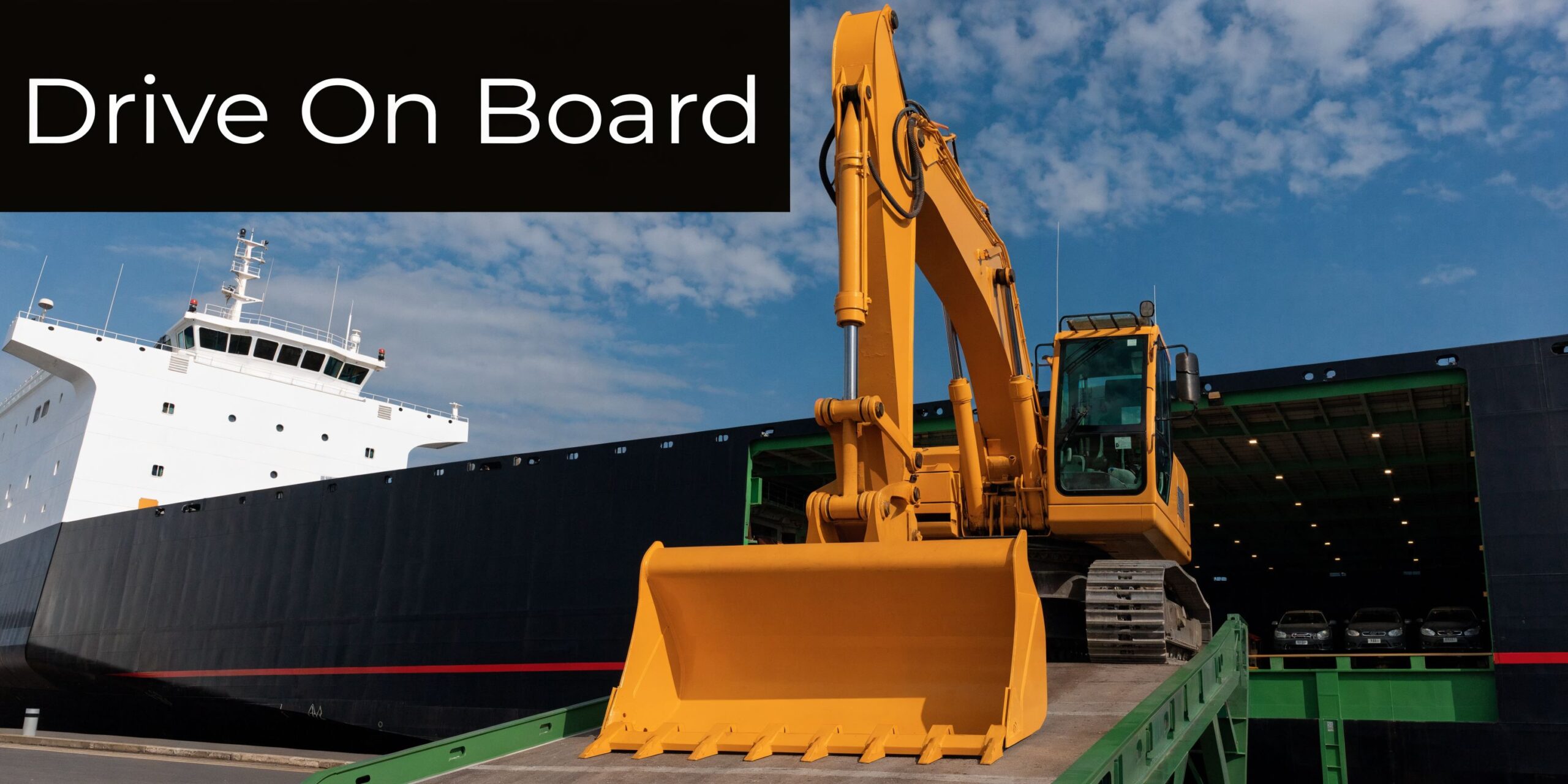
The easiest mental model is a very large commercial car ferry. The difference is that a Ro-Ro vessel is built for freight operations, not just passenger cars. Inside, you have deck layouts, ramp systems, clearance heights, and securing arrangements designed around traffic flow and quick turnaround.
Why shippers choose it
Ro-Ro works best when the cargo is:
- Self-propelled: cars, vans, trucks, tractors, harvesters, forklifts.
- Towable: unaccompanied trailers, rolling stock, specialist chassis.
- Loaded onto handling gear: heavy machinery or static project cargo positioned on a Mafi or cassette system for port movement.
The commercial appeal is straightforward. Fewer cargo touchpoints mean less handling friction. The road-to-port-to-vessel connection is also more natural than with methods that rely on crane lifts and separate unitisation.
For UK trade, this is not a niche mode. The UK Department for Transport’s Ro-Ro technical note states that the DfT has been tracking Ro-Ro freight movements since 1971, underlining how long Ro-Ro has been embedded in UK-Europe trade.
Why the UK context matters
Post-Brexit, operational simplicity at the loading ramp does not remove border complexity. It only changes where the risk sits. The movement can be physically fast and administratively slow if data, declarations, or inspection requirements are wrong. That is why Ro-Ro planning sits alongside broader EU-UK road freight decisions, especially where groupage, trailer handovers, or regulated goods are involved. This overview of the impact of Brexit on road transport between the EU and the UK is useful context if your cargo flow crosses the Channel regularly.
Practical rule: If your cargo can stay on wheels from origin to destination, Ro-Ro deserves serious consideration before you default to containers or crane-based loading.
Understanding Ro-Ro Vessels and Cargo
Ro-Ro is a handling principle first, then a vessel category. The principle is simple. Cargo rolls on, gets secured inside the ship, sails, then rolls off at destination. The vessel type tells you what kind of cargo mix the operator is built to handle efficiently.
The core operating idea
A Ro-Ro vessel uses ramps rather than relying on quayside cranes for each unit. Cargo may be driven by a stevedore, tugged into place, or positioned on specialist port trailers. Once on board, crews lash and secure each unit according to vessel layout, voyage conditions, and cargo characteristics.
For a new shipper, that distinction matters. If your cargo is not self-propelled, that does not rule out Ro-Ro. It may move well on a suitable trailer or mafi arrangement if the line and port accept it.
Main vessel types
PCC
A Pure Car Carrier is the closest thing to a floating multi-storey car park. It is optimised for cars and similar light vehicles, with multiple enclosed decks and efficient internal traffic flow.
Best fit:
- Vehicle manufacturers
- Dealers moving new units
- Fleet relocations
- Light automotive programmes
What it is not built for:
- Awkward over-height machinery
- Very heavy industrial units
- Cargo that needs unusual deck treatment
PCTC
A Pure Car and Truck Carrier adds more flexibility. These vessels handle cars efficiently, but they are better suited to trucks, buses, rolling machinery, and heavier wheeled cargo.
This is the more relevant format for commercial shippers because many mixed cargo programmes sit between standard car exports and true project cargo.
ConRo
A Container and Ro-Ro hybrid combines container slots with Ro-Ro decks. This can suit shippers with mixed consignments or supply chains where some cargo is best containerised while the wheeled element still benefits from ramp loading.
ConRo can be useful when one shipment includes:
- Packaged spare parts in containers
- Vehicles or trailers on Ro-Ro decks
- Industrial consignments that need two different handling methods under one service structure
GenRo
A General Ro-Ro vessel is the broadest category. These ships handle varied rolling cargo and support less standard freight profiles. If a shipment does not fit a neat automotive template, GenRo is where practical solutions appear.
GenRo provides practical solutions, such as:
- Construction machinery
- Agricultural equipment
- Breakbulk units loaded onto wheeled platforms
- Unaccompanied trailers
- Project cargo with unusual dimensions
Cargo that works well in Ro-Ro
Ro-Ro is strongest when the cargo’s physical form already suits rolling movement or can be adapted to it without excessive effort.
Common examples include:
- Cars and vans: straightforward automotive flows.
- HGVs and trailers: unaccompanied trailer traffic on short-sea routes.
- Agricultural machinery: tractors, sprayers, harvesters, implements on chassis.
- Construction equipment: excavators, loaders, rollers, telehandlers.
- Project cargo on Mafi trailers: static or oversized units that cannot be driven but can still be rolled aboard on specialist equipment.
What catches shippers out
Two cargoes can look similar and still require very different acceptance checks. Height, ground clearance, fuel status, battery condition, loose accessories, and whether the unit is operational all affect handling.
Tip: Never assume “it has wheels” means “it is ready for Ro-Ro”. Carriers and terminals need exact dimensions, running condition, and any special handling notes before they confirm acceptance.
The best Ro-Ro bookings start with accurate cargo identity, not a rough description. “Excavator” is not enough. Operators need the transport reality of that excavator.
Ro-Ro vs Containerised and LoLo Shipping
A UK importer moving farm machinery from mainland Europe starts with the wrong question. The core issue is not which shipping mode is familiar. It is which mode gets the unit through the port, across the border, and onward to site with the fewest handling steps and the least compliance friction.
For EU-UK and wider international trade, that decision has practical consequences. It affects port charges, loading windows, customs timing, cargo preparation, and how many chances there are for delay or damage before delivery.
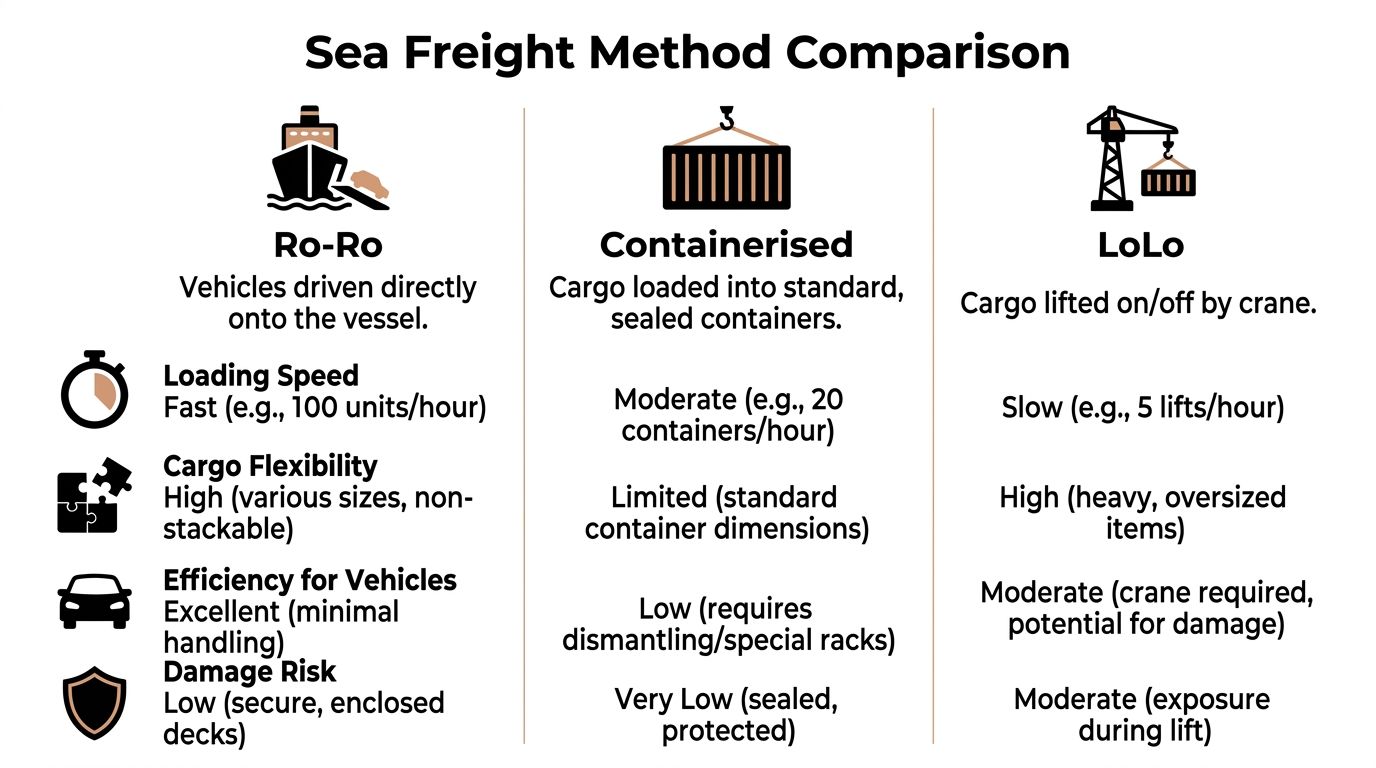
Speed in port
Ro-Ro is the fastest option in port for cargo that can be driven, towed, or shipped on a rolling platform. The unit is discharged by ramp, not by crane, and that removes several handling stages.
In practice, faster port turns matter less as a headline and more as an operational buffer. Shorter terminal dwell can help you hold a delivery slot, reduce storage exposure, and avoid rebooking inland haulage because the vessel worked later than planned. On EU-UK lanes, that matters more where customs status, driver planning, and terminal cut-offs all have to line up.
Ro-Ro does not remove border formalities. It does reduce the number of physical interventions. That distinction matters. If the paperwork is wrong, the shipment can still stop. If the paperwork is right, Ro-Ro gets cargo through the marine leg with less friction than crane or container handling.
Where container shipping still wins
Container shipping suits freight that needs enclosure, standard dimensions, and access to a wide global network. If the cargo is palletised, boxed, crated, or vulnerable to theft or weather, a sealed container is the better commercial decision.
It is also the practical choice when you need to consolidate multiple SKUs into one unit, route through transhipment hubs, or move cargo into inland depots that are built around box flows. Many shippers use international freight forwarding services for complex multimodal routing for exactly that reason.
The trade-off is handling. Vehicles and machinery need more preparation to fit container dimensions and carrier rules. That can mean partial dismantling, lashing plans, timbering, fluid checks, and reassembly at destination. The sea freight rate can look competitive, then the pre-carriage and destination labour erase the saving.
Where LoLo still makes sense
LoLo remains the right method for cargo that cannot roll safely and cannot fit standard container limits. Heavy plant, static industrial units, steel fabrications, and awkward project pieces belong in a crane-based operation.
That said, LoLo comes with a tighter planning burden. Lift points must be confirmed. Crane capacity has to match the actual shipping weight, not an estimate. Weather can interrupt handling. The cargo is also exposed during each lift, which increases the need for proper packing, surveys, and supervision.
I often see LoLo booked out of habit for machinery that could have gone on a mafi or trailer under Ro-Ro. That is rarely the cheapest mistake. It tends to show up later as avoidable crane cost, extra terminal handling, and longer coordination at both ends.
Core decision points
Freight rate alone does not settle the choice. The better comparison is total movement cost and execution risk.
Choose Ro-Ro if the cargo can stay in transport-ready form from collection to discharge. That means fewer handling events, simpler loading, and less chance of cosmetic or accessory damage.
Choose containerised shipping if enclosure, security, or stock consolidation matters more than keeping the unit intact.
Choose LoLo if weight, dimensions, or cargo design leave no realistic rolling option.
For EU-UK traffic, add one more filter. Ask how the mode fits the border process. A shipment that is physically simple can still become expensive if the mode chosen creates extra handoffs between port, customs agent, haulier, and consignee.
Ro-Ro vs Container vs LoLo at a Glance
| Factor | Roll-on/Roll-off (Ro-Ro) | Container (FCL/LCL) | Lift-on/Lift-off (LoLo) |
|---|---|---|---|
| Best cargo fit | Vehicles, trailers, machinery, cargo on wheeled platforms | Palletised, boxed, crated, mixed cargo | Heavy, static, oversized, awkward project cargo |
| Port handling | Ramp-based movement with fewer cargo touchpoints | Stuffing, lifting, stacking, terminal moves | Crane-based loading and discharge |
| Speed | Strong for rolling units and high-frequency lanes | Reliable but less direct for wheeled cargo | Slower where crane cycles and lift plans govern the operation |
| Damage profile | Favourable for wheeled cargo because handling is simpler | Strong protection from enclosure | More exposure during lifts and transfer |
| Flexibility | Excellent for rolling and towable freight | Excellent for standard global box networks | Best for cargo that cannot roll or fit container limits |
| Cost logic | Efficient when cargo stays intact on wheels | Efficient for standardised goods and packed freight | Justified only when cargo requires crane handling |
What works and what does not
What works:
- Ro-Ro for trailers, vans, tractors, and site equipment that can move or be positioned on a rolling platform without major modification
- Containers for packaged, mixed, or higher-risk cargo where sealing and standard handling are worth paying for
- LoLo for heavy or irregular units that require crane loading
What does not:
- Forcing machinery into containers because the box rate looks cheaper before packing and rework are priced properly
- Putting wheeled cargo into LoLo without checking whether a Ro-Ro service is available on the same trade lane
- Assuming Ro-Ro is automatically the low-cost option without checking port rules, customs procedures, and inland delivery constraints
Key takeaway: The best mode is the one that moves your cargo with the fewest avoidable handling steps while still meeting route, customs, and delivery requirements.
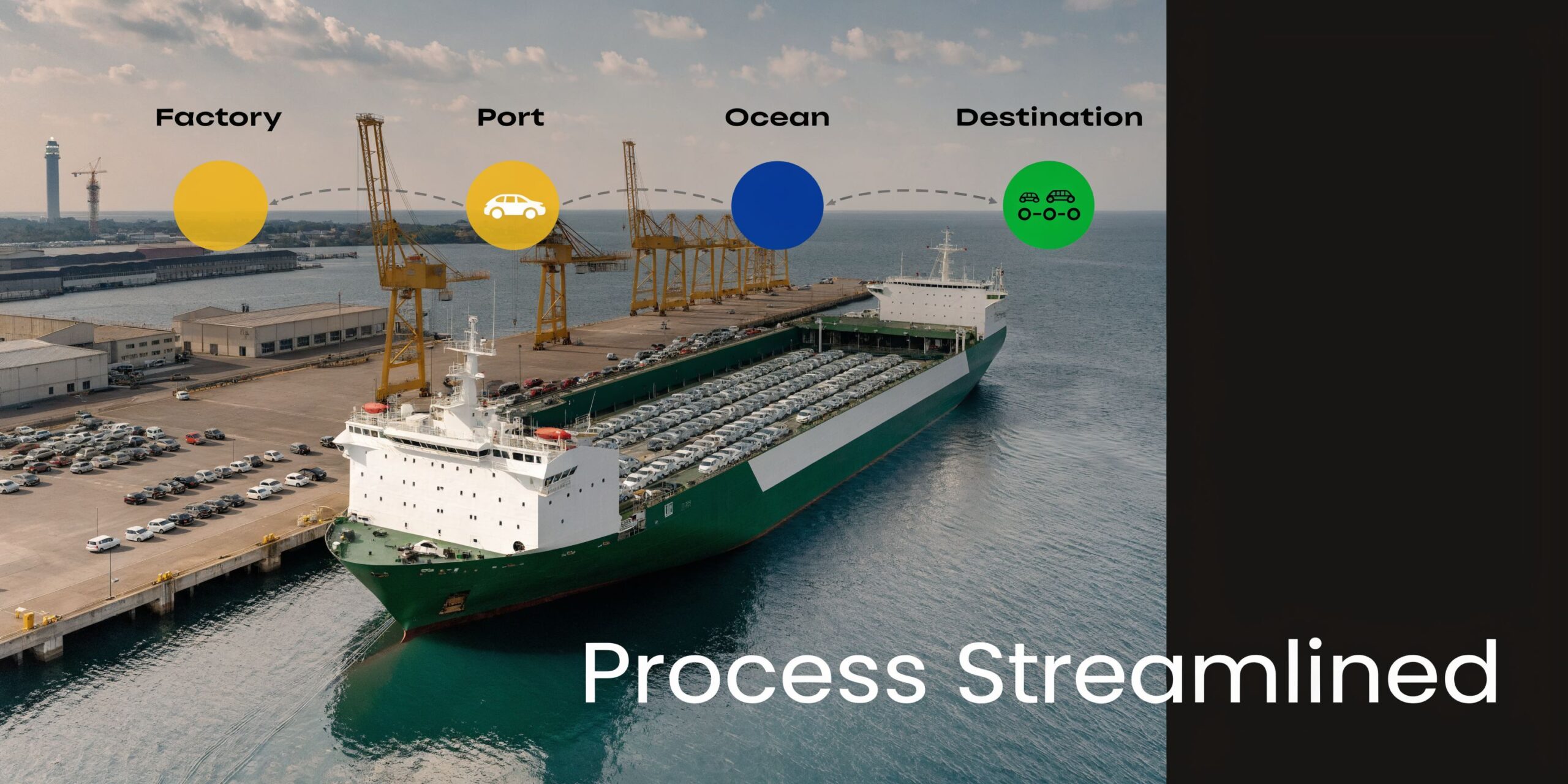
The Ro-Ro Operational Flow from Booking to Delivery
Ro-Ro looks simple from the quay. The cargo drives aboard, the doors close, and the vessel sails. The work that makes that possible starts much earlier.
Booking starts with exact cargo data
A workable quote depends on operational detail, not marketing description. The carrier or forwarder needs:
- Cargo dimensions: overall length, width, height
- Weight: actual operating or shipping weight
- Running status: self-propelled, towable, inoperable, loaded on mafi
- Commodity type: vehicle, machine, trailer, project cargo
- Origin and destination: including inland collection or delivery if required
- Special notes: leaks, low clearance, oversize points, removable parts, battery condition
The biggest booking mistake is approximate data. Understated height or weight can break the plan at the gate.
Pre-shipment preparation
Ro-Ro cargo needs to be physically ready for marine transport. That means inspection, cleaning where required, and making sure the unit matches the booking details.
Typical checks include:
- Condition survey with photos before handover
- Loose parts removed or secured
- Alarm systems disabled if required by the carrier
- Fuel, battery, and key handling rules confirmed
- Documentation matched to the physical unit
If the cargo is agricultural or construction equipment, cleaning matters more because dirt, plant material, and residues can trigger inspection issues.
Checkpoint: The best time to spot a missing chassis number, loose mirror, weak battery, or leaking hydraulic line is before the cargo leaves your yard.
Port receiving and handover
At the port, the cargo is checked in against booking and documentation. The terminal confirms that the unit presented is the unit declared.
For many shippers, a freight partner adds value behind the scenes at this stage. If your inland road leg, shipping booking, and document flow are disconnected, port receiving turns into a series of avoidable calls and gate delays. This is one reason many clients use broader international freight forwarding services rather than treating the sea leg in isolation.
Loading and internal vessel movement
Once received, the unit is queued for loading according to the vessel plan. Self-propelled cargo is driven aboard by trained terminal drivers. Non-running units may be tugged or loaded on specialist handling equipment.
Modern terminal support equipment is built for speed. The Galbreath trailer systems brochure notes that specialised hook-lift trailer systems can complete a full hoist, winch, and dump cycle in under 90 seconds, which shows how terminals maintain tight schedules on high-frequency routes.
That speed only helps if the cargo is properly prepared. An inoperable unit with poor tow points or unclear handling instructions can slow a whole sequence.
Stowage and lashing
On board, crews position cargo by deck strength, dimensions, routeing sequence, and safety considerations. They then secure it using lashings, wheel chocks, and other approved restraint methods.
This part is rarely visible to the shipper, but it matters. Good stowage protects not only the unit but also discharge efficiency at destination. If a cargo item is buried behind incompatible discharge order, time gets lost later.
Here is a useful visual overview of vehicle shipping flow in practice:
Voyage, discharge, and final-mile delivery
At sea, the process becomes comparatively uneventful if the cargo was accepted correctly and lashed well. The next pressure point is arrival.
On discharge, the reverse sequence applies:
- cargo is released from lashings
- units are driven or towed off
- terminal checks are completed
- customs or release formalities are cleared
- onward road delivery is scheduled
What works best is continuity. The same operational discipline used at booking should continue through release and final-mile planning. The cargo may have sailed efficiently, but the shipment is not successful until it reaches the consignee in usable condition and with the right paperwork closed out.
Navigating Costs Insurance and Documentation
A shipment can load cleanly, sail on time, and still become an expensive Ro-Ro job if the numbers behind it were wrong from the start. I see this most often on EU-UK moves where the sea leg is short, but customs, terminal rules, and responsibility gaps add cost faster than many first-time shippers expect.
Ro-Ro pricing is built around the unit you present and the process needed to move it. The freight rate matters, but it is only one part of the landed cost.
What drives Ro-Ro cost
The main cost drivers are operational:
- Dimensions and lane metres: larger units take more deck space and can limit where the carrier can stow them
- Weight and cargo type: heavy or unusual cargo may need a stronger deck position, specialist handling, or route approval
- Running condition: non-running cargo needs extra labour and equipment at port
- Port pair and service pattern: direct services, sailing frequency, and terminal congestion all affect price and timing
- Origin and destination trucking: distance from the nearest suitable Ro-Ro port can erase any saving on ocean freight
- Terminal and documentation charges: these are itemised separately from the headline freight rate
For UK and European trade, port choice decides whether Ro-Ro stays efficient. A cheaper sea rate from the wrong terminal can increase pre-carriage, waiting time, and customs coordination work. On international moves outside the short-sea market, the same principle applies. The vessel leg may be competitive, but inland positioning, export formalities, and destination release costs still need to be priced properly.
Insurance needs closer attention than many shippers expect
Ro-Ro cargo travels as a handled unit, not inside a sealed container. That changes the risk profile and the way insurers assess a claim.
The pressure points are straightforward:
- cosmetic damage to vehicles, plant, and painted machinery
- battery failure or starting problems at handover
- loss of loose accessories or personal items left inside the unit
- exposure during port handling, towing, or storage
- unclear risk transfer under the sale terms
Insurance should match the actual movement, including port handling and any inland legs, rather than just the sea crossing. If responsibility for risk and cost is still being agreed, review the Incoterms 2020 guide covering buyer and seller obligations across each transport leg.
Practical rule: Record condition at handover with dated photos, note existing marks on the inspection report, and make sure the unit identification matches every transport document. Claims weaken quickly when condition evidence and paperwork do not line up.
Documentation is a primary delay point
For EU-UK Ro-Ro, the vessel system is built for speed. The paperwork needs to be ready at the same standard. If the customs entry, commodity description, vehicle identification, or release reference is wrong, the port will not absorb that mistake for you.
That friction is sharper on short-sea routes because there is little slack in the schedule. A container move can sometimes hide poor document discipline behind longer dwell times. Ro-Ro cannot.
Regulated cargo adds another layer. Agri-food, controlled products, and shipments subject to inspection can be held up by missing commodity detail, mismatched certificates, pre-notification errors, or inspection bookings that were not arranged early enough.
Documents that need close control
Requirements vary by route and cargo type, but most Ro-Ro files should be checked against the same core set:
- Commercial invoice and packing information
- Booking reference and transport instructions
- Vehicle, trailer, chassis, or equipment identification
- Export and import customs entries
- Origin or preference documents where applicable
- Inspection, sanitary, phytosanitary, or veterinary documents for regulated goods
- Destination release instructions and delivery authority
The common failure pattern is split ownership. The haulier has one data set, the forwarder has another, customs has a third, and the terminal receives whatever is left. If commodity codes, weights, values, or unit numbers do not match across the file, the shipment can miss the intended sailing or sit at destination waiting for a corrected release.
What works in EU-UK and international Ro-Ro operations
The cleanest movements share three disciplines.
First, the shipment data is checked before the truck leaves origin. That includes unit dimensions, running condition, customs data, and any route-specific restrictions.
Second, the physical unit and the documents describe the same cargo in the same way. That sounds basic, but it is where many avoidable delays begin.
Third, inspection-sensitive or controlled cargo is prepared early, with customs and compliance steps built into the booking timeline rather than treated as an admin task at the port.
That is the practical difference between a Ro-Ro move that stays fast and one that burns time and margin. Multica’s value in these flows is not just booking space. It is aligning transport, customs, and document control early enough to keep EU-UK and international shipments moving as planned.
Ideal Ro-Ro Use Cases and Future Trends
A common Ro-Ro brief sounds simple on paper. A manufacturer has finished tractors ready in the Midlands, a buyer needs them in Ireland or mainland Europe, and the sales team wants the fastest route to delivery. The friction appears outside the vessel leg. Export timing, terminal acceptance rules, trailer availability, customs status, and inland delivery windows decide whether the move stays efficient or starts adding avoidable cost.
Ro-Ro works best where the cargo is already built to move on wheels, tracks, mafi trailers, or other rollable equipment, and where keeping the unit intact has more value than breaking it down for a container move. That is why it remains a strong fit for finished vehicles, agricultural machinery, construction equipment, unaccompanied trailers, and some project cargo.
A tractor programme into Europe is a good example. The unit can move as built, dealer preparation can happen closer to destination, and the shipper avoids dismantling, lashing inside a box, and repacking on arrival. That saves handling time, but only if the carrier, port, and inland haulier all accept the unit’s exact dimensions and running condition.
Construction and heavy plant moves are similar, but the trade-offs are sharper. A wheeled loader or excavator may fit Ro-Ro better than a container from a handling point of view, yet the shipment can still slow down if route permits, escort requirements, site delivery restrictions, or destination discharge arrangements are left too late. For EU-UK and international traffic, those operational details matter more than the sea crossing itself.
Automotive and machinery exports
Automotive flows are the clearest Ro-Ro use case because vessel design, terminal processes, and inland delivery patterns already suit the cargo. Machinery exports also benefit, where the shipper wants to move finished units without strip-down work or specialist container packing.
The pressure point is not whether Ro-Ro can handle the cargo. It can. The pressure point is space and coordination on the lane you need.
On busy corridors, short notice bookings can mean higher rates, fewer sailing options, or compromise on inland timings. Electric vehicles add another layer in some trades because carriers and terminals may apply extra acceptance checks around battery status, documentation, or stowage policies. That does not rule out Ro-Ro. It means the booking needs cleaner planning and earlier confirmation than many shippers expect.

Where Ro-Ro works best
The strongest Ro-Ro moves share four things in common.
- The cargo can stay in one piece: finished vehicles, tractors, mobile plant, and trailer-based loads lose time and value when dismantled for container shipment.
- The route has dependable port and inland connections: frequent sailings help, but collection and final delivery capacity matter just as much.
- Handling risk is lower if the unit rolls rather than lifts: fewer cargo touches can reduce damage exposure on suitable equipment.
- The compliance path is clear before dispatch: EU-UK customs, regulated cargo controls, and destination release requirements need to be built into the operating plan, not handled reactively at the port.
That last point separates workable Ro-Ro plans from expensive ones. International Ro-Ro is sold on speed, but speed disappears quickly if a unit reaches the terminal before the file is ready, or if destination authorities need documents that were not prepared at origin.
Future trends that will affect shippers
The next changes in Ro-Ro are operational, not cosmetic.
Terminal capacity is likely to stay tight on popular routes. Carriers are becoming stricter about cargo condition, dimensions, battery-related declarations, and cut-off compliance. At the same time, EU-UK trade continues to reward shippers who treat customs and transport as one workflow instead of two separate tasks.
The commercial effect is straightforward. Good Ro-Ro providers will be judged less on whether they can quote a sailing and more on whether they can control the handoffs around that sailing, from pre-carriage and port delivery to customs status and destination release.
For shippers, the best use cases are still clear. Ro-Ro earns its place when the cargo is rollable, the timetable is realistic, and the compliance file is ready early enough to protect transit time and landed cost. Multica helps remove the friction in that chain by aligning booking, documentation, customs coordination, and inland planning before small errors turn into missed sailings or storage charges.
Your Essential Ro-Ro Shipper Checklist
Before you book your next roll on roll off shipment, run through this list.
- Confirm exact cargo dimensions and weight: Do not estimate. Port acceptance and vessel planning depend on accurate data.
- State whether the unit runs: Self-propelled, towable, or non-running cargo each needs different handling.
- Match documents to the physical unit: Chassis numbers, model details, weight, and commodity description should align everywhere.
- Inspect and photograph the cargo: Record condition before handover, including existing marks and any loose accessories.
- Prepare the unit for transport: Secure removable parts, check battery status, and follow carrier rules on fuel and keys.
- Check customs and inspection requirements early: This matters most on EU-UK and regulated cargo flows.
- Review insurance against actual risk: Ro-Ro cargo has a different exposure profile from sealed container freight.
- Confirm port cut-offs and delivery windows: A missed gate time can undo the speed advantage of Ro-Ro.
- Plan the inland leg as part of the shipment: Collection and final delivery often decide whether the whole move runs smoothly.
- Use a single operational owner where possible: Split responsibility usually creates the most avoidable errors.
A good Ro-Ro shipment feels simple because the planning was disciplined. When the preparation is weak, the same shipment can become expensive very quickly.
If you need a logistics partner that can coordinate Ro-Ro movements alongside road freight, customs clearance, documentation, veterinary support, warehousing, and final distribution, Multica Group can help build the full transport chain around your shipment rather than treating the sea leg in isolation.