If you operate vehicles in European cities, understanding how Low Emission Zones (LEZ) work is essential. These zones restrict the movement of high-emission vehicles to improve air quality. Knowing where LEZs are enforced, the compliance requirements, and the potential penalties you may face helps avoid disruptions in your deliveries. As regulations continue to evolve, it is crucial to stay updated and adapt your fleet – consider the steps you can take to meet the required standards.
Overview of Low Emission Zones and Their Purpose in Europe
Low Emission Zones (LEZ) are designated urban areas with entry restrictions for vehicles, aiming to reduce harmful emissions. These zones play a key role in improving public health by lowering air pollution levels, particularly in densely populated cities. They also support urban planning strategies focused on sustainable development and eco-friendly transport solutions. By enforcing emission standards, LEZs encourage the adoption of low-emission vehicles such as electric or CNG-powered models and phase out older, more polluting vehicles. Regulations vary across European cities, but the common goal remains the same – mitigating environmental impact. Implementing LEZs aligns with transport policies aimed at public health and promoting healthier urban living conditions. Proper design and enforcement of these zones are critical for achieving measurable improvements in air quality and sustainable urban development.
Current Map of Low Emission Zones (LEZ) in Europe and Major Cities
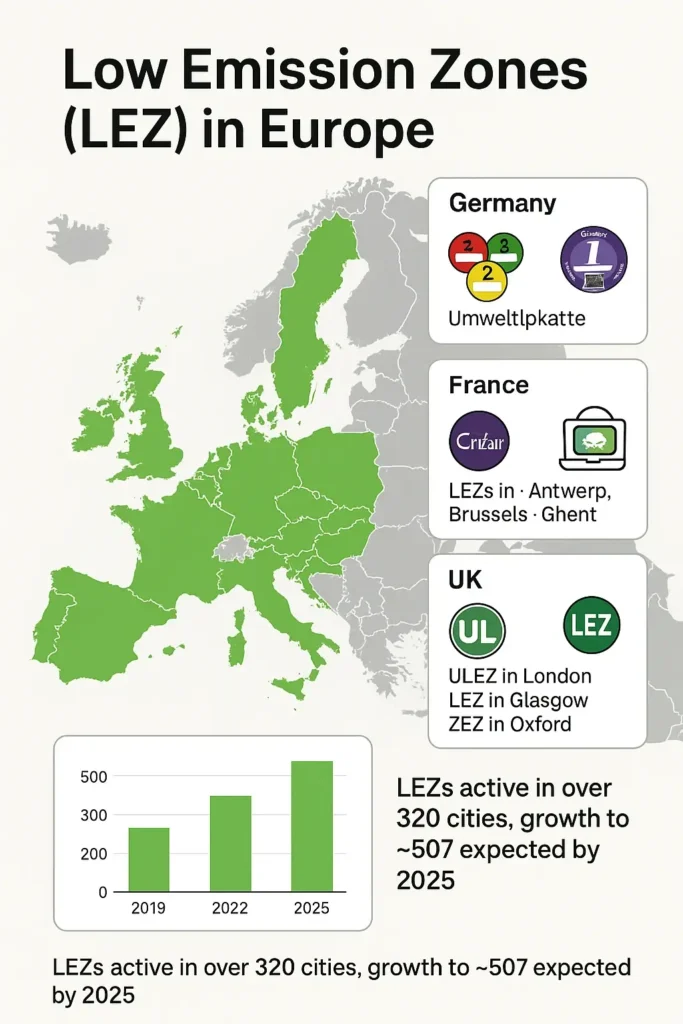
Ever wondered how widespread LEZs are across Europe? The current map highlights extensive LEZ regulations across major countries and cities.
- Germany enforces Umweltzone zones with mandatory eco-stickers in cities such as Berlin, Munich, and Stuttgart.
- France applies Crit’Air zones in Paris, Lyon, and Grenoble, requiring stickers indicating emission levels.
- The UK operates London’s LEZ and ULEZ, restricting access for high-emission vehicles in central areas.
- Italy uses ZTL zones in cities like Milan, Rome, and Florence to limit vehicle entry.
- The Netherlands implements milieuzones in Amsterdam, Rotterdam, and Utrecht, often using color-coded permits.
Poland has introduced Clean Transport Zones (SCT), which came into force in July 2024.
Regulations differ in severity and enforcement methods, highlighting the importance of ensuring vehicle compliance for smooth urban access.
(Here you can purchase eco-stickers for Umweltzone (Germany) and Pickerl (Austria) in Poland:
LEZ Compliance in the EU: Vehicle Stickers and Certification
Official confirmation that your vehicle meets emission requirements is key to gaining access to LEZs across Europe. It certifies compliance with defined emission standards, mostly based on Euro norms. The requirements for eco-stickers vary by country but generally involve obtaining a sticker or certificate confirming compliance.
- In Germany, this is the Umweltplakette.
- In France, the Crit’Air sticker applies.
- In the UK, there is no sticker system; compliance is checked automatically using cameras.
The certification process typically includes verifying vehicle documents, emission data, and registration details – often available online or through authorised agencies. Vehicles meeting Euro 4 or higher standards usually qualify, while electric and hybrid vehicles often enjoy exemptions or easier access. Proper registration and obtaining the required eco-sticker are crucial to avoiding penalties and ensuring smooth access to LEZs.
Penalties and Consequences of Non-Compliance Across Regions
Penalties for breaching LEZ rules vary widely across Europe, often involving hefty fines, vehicle entry bans, and other serious legal consequences.
- In Germany, fines are typically around €80, with repeated violations potentially leading to vehicle bans.
- In Italy, fines range from €75 to €450 depending on the city, with vehicle towing being common.
- In London, failure to register a vehicle in the LEZ system results in a £1,000 fine per day for each unregistered entry.
- In France, failure to obtain a Crit’Air sticker results in a fine starting from €150, even for vehicles meeting the standards.
- In Poland, the fine is PLN 500, with the possibility of vehicle removal.
Some regions also impose penalty points or increased entry charges. This diversity in enforcement highlights the importance of knowing local requirements to avoid legal and financial consequences.
Preparing for LEZ Entry: Key Strategies and Vehicle Choices
To comply with LEZ requirements and avoid penalties, adopting effective strategies and choosing the right vehicles is essential.
- Prioritise Euro-compliant alternatives such as electric or CNG-powered vehicles, which are generally fully permitted in LEZs.
- Consider retrofitting vehicles to meet low-emission requirements (e.g., installing CNG systems).
- Research city-specific regulations and obtain the necessary eco-stickers or certificates.
- Implement telematics solutions for fleet management to monitor compliance and optimise routes.
- Proactively plan for vehicle replacement or modifications to avoid fines and supply chain disruptions.
These strategies maximise operational efficiency while aligning with environmental policies. Staying informed about active LEZs enables smooth operations amid changing regulations across Europe.
Conclusion
Understanding LEZ regulations is essential for maintaining smooth urban mobility. Ensure your vehicles meet local emission standards, obtain the required eco-stickers, and consider greener alternatives to avoid penalties. Stay updated on zone restrictions and compliance deadlines. Proactive planning minimises disruptions and supports environmental goals. Regularly check for updates from authorities to adapt quickly. With proper preparation, you ensure legal compliance, protect your operations, and contribute to improving air quality in European cities.