A buyer has accepted your price. Production is complete. The goods are packed and booked. Then the deal stalls over three letters: FCA.
That happens more often than people admit. UK exporters who grew up on FOB for sea freight or EXW for straightforward collections often assume the fca shipping term is just a newer label for the same thing. It isn’t. In post-Brexit trade, that assumption causes the exact problems nobody wants at dispatch stage: customs confusion, loading disputes, missed collections, and arguments over who carries the risk when something goes wrong at the terminal.
FCA can be one of the most practical Incoterms available. It suits containerised cargo, road freight, air freight, and multimodal moves far better than the older shipping terms many businesses still default to. But it only works cleanly when the contract names the handover point precisely and both sides understand what happens before and after that handover.
If you're shipping from the UK to the EU, USA, or beyond, FCA isn't a technical footnote. It's a commercial decision that affects customs responsibility, cash flow, insurance exposure, and the day-to-day running of your shipment.
Navigating Your First FCA Shipment
A common first FCA situation looks like this. A UK manufacturer sells goods to a buyer in Germany or the USA. The buyer wants to control the main freight and nominates its own carrier or forwarder. The seller is happy with that because it avoids negotiating ocean or road rates on the buyer’s behalf.
Then the questions begin.
Does the seller have to load the truck? Who handles UK export clearance? If the cargo is going by sea, why not just use FOB? If the buyer’s haulier turns up late, who pays for the disruption? Those are practical questions, not legal theory. They determine whether the shipment moves smoothly or turns into a claims file.
What usually causes the confusion is that FCA sits in the middle of two terms people think they already understand:
- EXW feels simpler because the seller just makes the goods available.
- FOB feels familiar because many teams still associate sea freight with FOB by habit.
- FCA looks flexible but that flexibility creates room for sloppy wording.
The fca shipping term only becomes easy when the named place is crystal clear. If the contract says “FCA London” or “FCA Felixstowe” and stops there, you've left too much open. Is the handover at the seller’s yard, a forwarder’s depot, a terminal gate, or somewhere else entirely? Risk transfer depends on that detail.
Practical rule: If your operations team can’t identify the exact physical handover point from the contract alone, the FCA term hasn’t been written properly.
In current UK trade, that matters more than it used to. Export clearance, carrier compliance, and border formalities now sit much closer to the commercial terms than many sales teams realise. A badly chosen Incoterm can still move cargo. It just moves it with friction, delay, and avoidable cost.
Used properly, FCA gives both sides a cleaner split of responsibilities. Used casually, it creates grey areas at exactly the point where nobody wants uncertainty: collection, customs, and risk transfer.
What Is the FCA Shipping Term Really?
Think of FCA as a relay race. The seller runs the first leg. The buyer runs the second. The shipment only works when both runners know exactly where the baton changes hands.
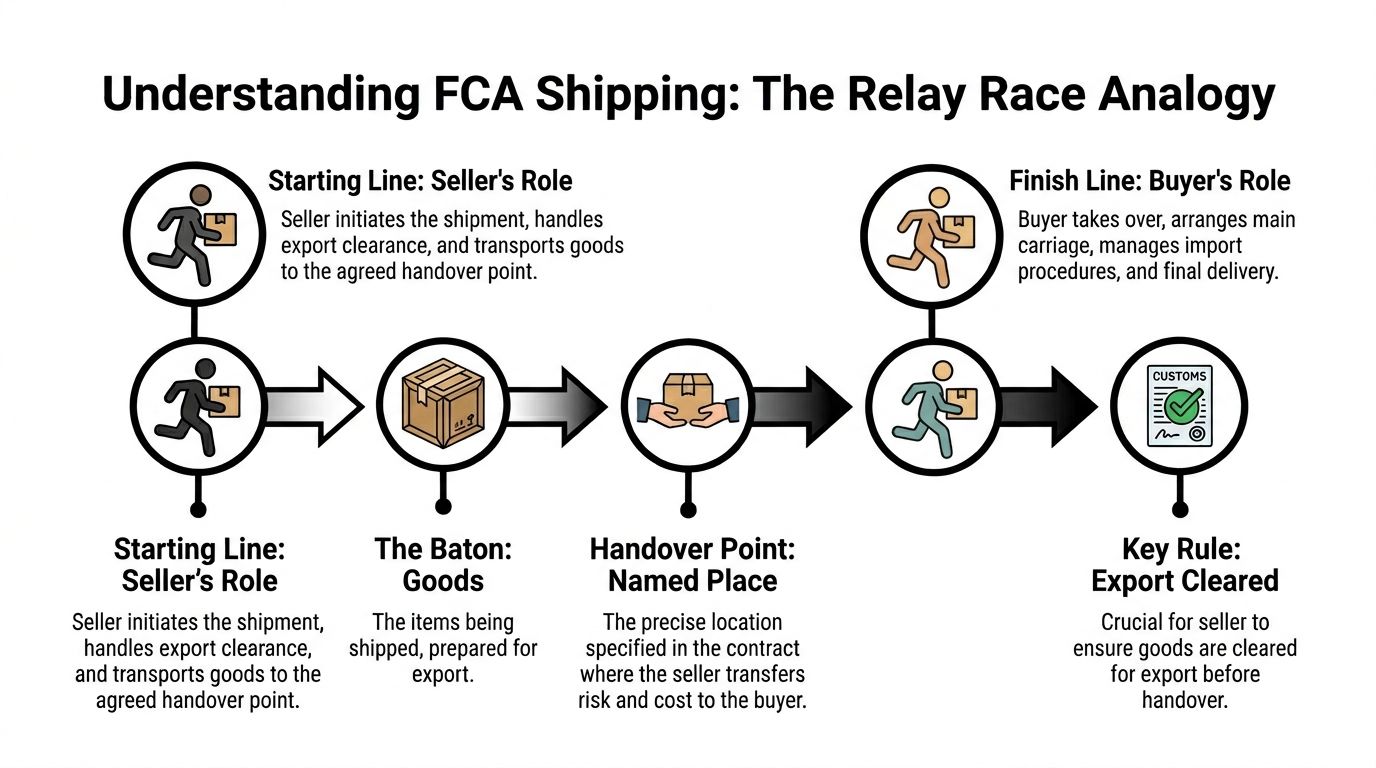
Under FCA, or Free Carrier, the seller delivers the goods, cleared for export, to the carrier or another party nominated by the buyer at the agreed named place. That named place can be the seller’s premises, a forwarder’s depot, a rail terminal, an airport cargo facility, or a container terminal.
That is the key point of FCA. It isn’t tied to a ship’s rail or to one transport mode. It reflects how freight moves now.
Why FCA exists
FCA was introduced in the Incoterms 1980 revision to deal with the rise of containerised shipping, and the 1990 revision simplified it to “Free Carrier at Named Point,” which helped drive wider use in UK-EU road freight. The same historical revision notes that road freight accounts for 85% of intra-European shipments in this context, which helps explain why FCA became so useful for multimodal trade across Europe and beyond in the UK market (ICC history of Incoterms).
Older maritime terms were built for a world in which cargo was physically presented alongside a vessel and loaded in a more direct way. Containerisation changed that. Sealed containers are often gated into terminals well before vessel loading, and many shipments combine road, port, sea, and inland delivery as one operational chain.
That makes FCA practical where FOB often becomes awkward.
What the seller does
The seller’s core obligations under the fca shipping term are straightforward in principle:
- Prepare the goods so they’re packed and ready for the agreed transport chain.
- Handle export formalities so the goods are cleared for export before handover.
- Deliver to the named place agreed in the contract.
- Hand over to the buyer’s nominated carrier or other nominated party.
The seller’s job ends at the agreed delivery point under the agreed conditions. Not earlier. Not later.
What the buyer takes over
Once handover happens, the buyer takes over the transport chain that follows. In practice, that usually means:
- arranging the main carriage
- managing onward freight
- handling import procedures at destination
- carrying the transit risk from the FCA handover point onward
That’s why FCA suits buyers who want control over freight procurement and routing, but still want the seller to handle export-side formalities properly.
Why it works well in modern UK trade
For UK shippers, FCA is often the best operational fit when goods move by truck to a terminal, by container to an overseas port, or through a combination of road, sea, air, and depot handling. It matches the precise handover point instead of forcing the contract into an older shipping model.
If you want a broader refresher on how Incoterms allocate responsibilities across international moves, this overview of Incoterms 2020 and safe international trade is a useful companion.
FCA works best when the contract describes the physical handover point the same way your warehouse, customs team, and carrier would describe it on the day of collection.
Seller and Buyer Obligations A Clear Division of Labour
A lot of FCA disputes start the same way. The sales team agrees FCA because it sounds straightforward, the warehouse assumes the buyer’s haulier will arrive with the right vehicle, and the customs entry is still being checked when the truck turns up. By lunchtime, collection has failed, storage is being discussed, and both sides are arguing about whose problem it is.

Under FCA, the division of labour is clear in principle. In practice, post-Brexit UK-EU trade has made the handoff more sensitive because customs readiness, carrier instructions, and site access rules all have to line up on the same day. Problems often start when commercial teams treat FCA as a pricing term and operations teams discover it is really a collection plan with legal consequences.
What the seller must do
Under the fca shipping term, the seller’s job usually covers four areas:
- Prepare the goods properly. Packaging, marks, labels, and unitisation must suit the journey the parties have agreed, not just the first loading move.
- Issue accurate commercial documents. The invoice, packing data, commodity descriptions, and shipment details need to match what is physically handed over.
- Complete export formalities. For UK exports, that usually means making sure the export declaration and supporting data are in order before release.
- Present the goods at the named place. The cargo must be available to the buyer’s nominated carrier at the agreed point, on the agreed date, and in the agreed condition.
Sellers often get caught out here. FCA does not forgive a loose description, a late customs entry, or a warehouse team working from different instructions than the customer service team. If the collection fails because the goods were not ready, the seller can still face wasted vehicle charges, missed bookings, and arguments over who pays.
The loading point that creates liability
Loading is often the point where FCA moves from theory to cost.
If the named place is the seller’s premises, the seller is usually responsible for loading the buyer’s collecting vehicle. If the named place is a terminal, depot, or another off-site location, the seller’s task is usually to deliver the goods there for handover under the agreed conditions. That difference needs to be written clearly, especially in UK-EU traffic where a failed collection can also affect customs timing and driver waiting time.
The practical question is simple. Who is expected to put the goods on the vehicle, with what equipment, and under whose site rules?
What goes wrong at seller premises
In my experience, disputes at seller premises are rarely caused by the Incoterm itself. They usually come from poor operational detail.
Common failure points include:
- Vehicle mismatch. The buyer’s haulier arrives with equipment the site cannot load safely.
- Handling limits. The warehouse has forklift, dock, weight, or height restrictions that were never shared.
- Cargo assumptions. One side expects standard pallet handling, but the goods need clamps, side-loading, load bars, or special restraint.
- Timing conflicts. The truck arrives before export clearance is accepted, before the goods are picked, or outside the site’s booking rules.
- Brexit-related document gaps. The shipment is commercially ready, but MRN details, commodity coding, or supporting export data are still unresolved.
Those are not minor admin errors. They create direct cost. The haulier may charge waiting time or dead freight. The seller may lose the loading slot. The buyer may miss a feeder, linehaul departure, or delivery booking further down the chain.
Warehouses do not work from legal theory. They work from collection references, loading capacity, customs status, and cut-off times.
What the buyer must do
The buyer takes on more than freight booking under FCA. The buyer has to make the collection workable.
That usually means:
Nominate the carrier properly
Give the seller the haulier or forwarder details, booking reference, driver instructions if available, and the expected collection date in time to plan dispatch.Confirm the pickup conditions
The seller needs a specific slot, not a broad promise that someone will collect "this week".Arrange onward carriage
Main transport, transhipment, and destination routing sit on the buyer’s side after handover.Handle import-side formalities
Import customs, destination compliance, duties, and inland delivery after arrival remain with the buyer.Make sure the carrier can collect what was sold
If the cargo is oversized, high-value, temperature-sensitive, or needs specific securing, the buyer has to instruct a carrier that can perform the job.
This matters more now in UK-EU trade than it did before Brexit. Border processes have added more points where bad data or weak coordination can stop the move, even when the goods are physically ready.
Documents and proof decide arguments
A surprising number of FCA claims turn on evidence rather than principle. Both sides say they understood the arrangement. The side with the better records usually has the stronger position.
Sellers should keep:
- collection booking details
- export status and release records
- handover notes or collection confirmation
- photos or exception notes if loading issues arise
- timestamped emails or messages if the nominated carrier is late, unsuitable, or refuses the cargo
Buyers should keep the same standard of record on carrier nomination, pickup instructions, and onward bookings. Without that paper trail, a missed collection can turn into a dispute over storage, rebooking charges, detention, or damaged customer relationships.
What good FCA discipline looks like
Teams that use FCA well tend to be strict about a few basics:
| Operational point | What works |
|---|---|
| Named place | Full address plus the exact handover point on site |
| Loading responsibility | Written clearly in the order or shipping instructions |
| Customs readiness | Export formalities completed before collection is confirmed |
| Carrier nomination | Sent early enough for the warehouse and customs team to act |
| Site restrictions | Shared before dispatch, not discovered when the truck arrives |
| Handover proof | Signed or digitally recorded and stored with the shipment file |
FCA works well when everyone is managing the same physical handoff. It causes trouble when the contract says one thing, the booking says another, and the warehouse is left to sort out the gap.
The Critical Moment Risk and Costs Transfer
A typical UK to EU dispute starts the same way. The goods left the seller’s site on time, the truck reached the terminal, and then a damage or delay claim lands on someone’s desk. The argument is rarely about the sale itself. It is about the exact point where FCA delivery happened, because that point decides who carried the risk and which costs sit where.
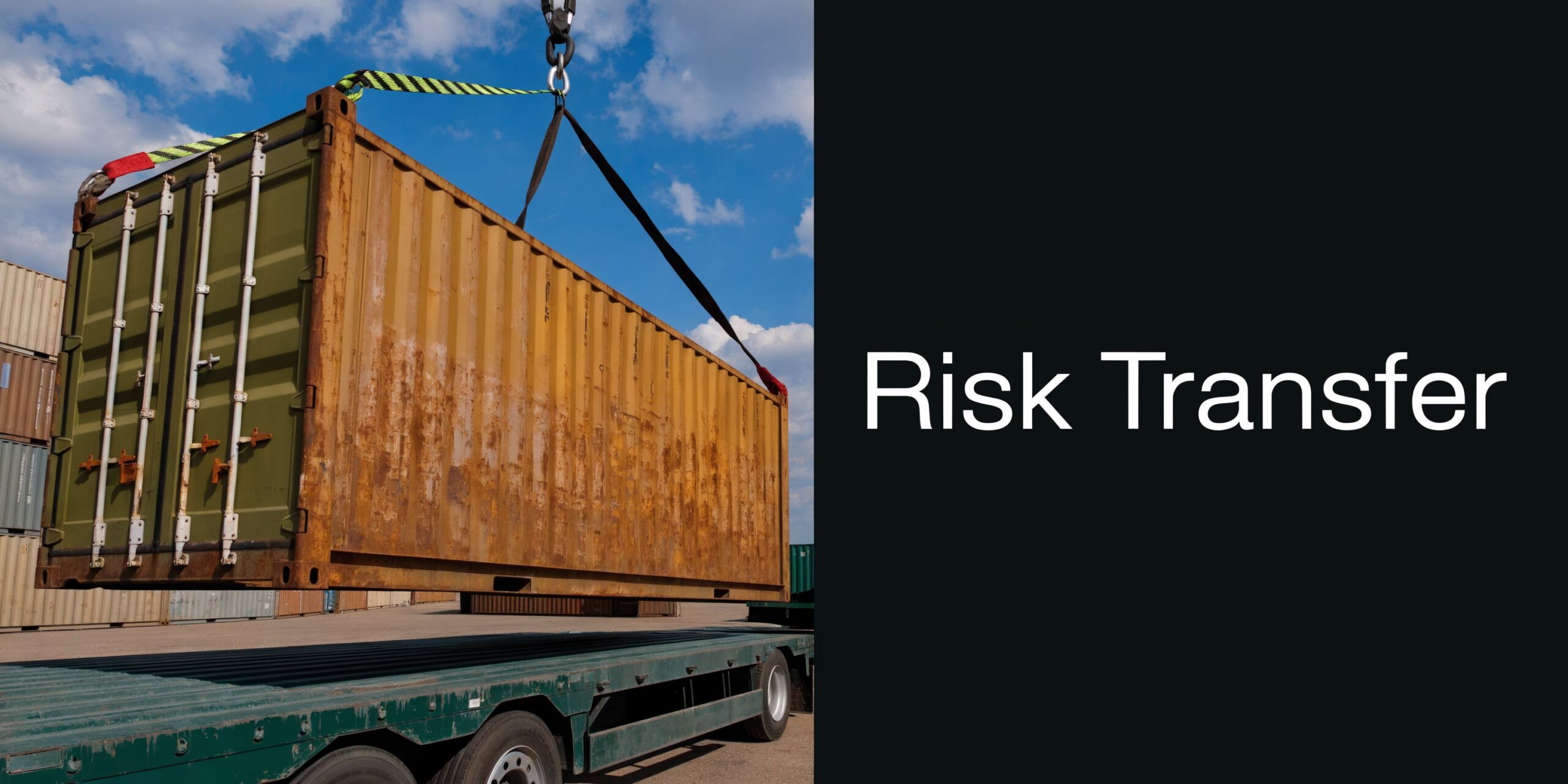
Under FCA, risk and cost responsibility shift at the named place once the seller has completed the delivery obligation set by the contract. If the named place is vague, both sides leave room for argument over damage, waiting time, storage, terminal charges, and insurance response. In post-Brexit UK and EU trade, that lack of precision causes more trouble because customs timing, GVMS references, terminal booking rules, and carrier cut-offs now affect whether a handover is treated as complete or failed.
FCA at the seller’s premises
This is common where a buyer arranges collection from a factory or warehouse.
If the contract states FCA seller’s premises, the seller usually delivers by loading the goods onto the buyer’s nominated collecting vehicle. Risk transfers once loading is complete. If a pallet is dropped during loading, or the load shifts because it was secured badly before departure, liability often turns on whether delivery had been completed at that moment.
That point matters in practice. Sellers sometimes assume the buyer’s haulier is already carrying the risk as soon as the truck arrives on site. That is not how FCA works when delivery is at the seller’s premises and the seller is responsible for loading.
FCA at another named place
The position changes when the named place is a terminal, depot, airport, or forwarder’s facility.
In that version, the seller must get the goods to the agreed place and hand them over there in line with the contract terms. The seller is not automatically responsible for unloading from the arriving vehicle unless the agreement says so. That detail gets missed often, especially when the sales team writes “FCA Felixstowe” or “FCA forwarder warehouse” and leaves the warehouse and transport teams to interpret it later.
Post-Brexit, this can get expensive quickly. A truck can arrive at the right port area but still miss the intended FCA handover point because the customs entry is not live, the terminal reference is wrong, or the booking was made under a different party name. The goods are physically near the destination, but legal delivery may not have happened yet.
The named place must describe an operation, not just a location
Broad wording creates avoidable disputes.
Poor wording looks like this:
- FCA London
- FCA Felixstowe
- FCA buyer’s forwarder warehouse
Useful wording tells the transport team exactly where and how handover happens:
- full site name and complete address
- gate, bay, depot, terminal, or warehouse reference
- whether the seller loads or only presents the goods
- whether the carrier collects at site or receives the goods after seller delivery to another point
- any cut-off, booking reference, or customs pre-condition needed before handover is accepted
If a driver, warehouse supervisor, and claims handler would give three different answers to “where was FCA delivery made?”, the clause is not good enough.
This visual walkthrough helps if you want to see the transfer point in a shipment flow:
Costs usually follow the transfer point, but exceptions cause the disputes
Risk transfer and cost transfer often move together under FCA, but operational charges still need separate attention. Waiting time, failed collection fees, demurrage exposure, storage, redelivery, and customs-related delays do not sort themselves out just because the contract says FCA.
I have seen UK exporters lose time and margin here after Brexit because the sales contract said FCA terminal, the booking showed merchant haulage under the buyer’s forwarder, and the warehouse released the load before the customs status was ready. The shipment moved, but the paperwork and instructions did not line up. That gap is where disputes start.
A practical rule is to check three records before dispatch:
- the sales contract
- the transport or forwarder booking
- the warehouse release instruction
Those three documents should describe the same named place, the same handover method, and the same loading responsibility. If they do, FCA is usually straightforward. If they do not, the handover point becomes an argument instead of a control point.
FCA Compared to EXW and FOB
A UK seller agrees a shipment to Germany on EXW because the buyer asked for it. Collection turns up late, the export entry is still unresolved, and the seller’s warehouse team is left arguing with a foreign forwarder about who is responsible for what. A week later, another shipment moves under FOB even though it is a container booking through a terminal. The goods are inside the port system, but nobody can say with confidence when risk passed. Those are the cases that push companies toward FCA.
FCA usually gives a cleaner result for UK exporters trading with the EU. The seller keeps control of UK export formalities and hands over at a named place that matches how container, road, rail, or air freight moves. The buyer still controls the main carriage. In post-Brexit trade, that split is often more practical than EXW and more accurate than FOB.
FCA versus EXW
EXW looks attractive on paper because the seller’s obligation is light. In real cross-border trade, especially UK-EU movements, it often pushes too much onto the buyer too early.
A buyer based overseas may not be well placed to manage collection timing, export documentation, customs data, or communication with the seller’s loading site. The legal simplicity of EXW can turn into operational confusion within hours. If the seller still ends up answering carrier questions, helping with export data, or controlling access to the goods, the contract says one thing while the shipment runs another way.
FCA addresses that mismatch. The seller clears the goods for export and delivers them to the buyer’s nominated carrier at the agreed place. That structure is usually easier to run and easier to defend if there is a dispute.
For businesses shipping after Brexit, that matters. The party based in the UK is normally in the better position to manage UK export formalities and coordinate site release. If your team is still comparing terms for cross-border movements, this guide to transporting goods to the United Kingdom after Brexit gives useful context on where border friction still shows up.
EXW still has a use. It can work in domestic trade or in tightly managed arrangements where the buyer has a strong UK presence and can control the export-side process. Many businesses use it out of habit when FCA would fit the operation better.
FCA versus FOB
FOB remains common in sales conversations because it is familiar. For container traffic, familiarity is not enough.
FOB was built around goods being loaded on board a vessel. Container shipments rarely follow that clean handover logic anymore. The container is often delivered to a terminal, stack, or carrier receiving point before the vessel stage becomes relevant. By then, there may already be storage exposure, terminal handling issues, or cut-off failures that FOB does not describe well.
FCA fits that reality better because the handover can be tied to the carrier receipt point rather than the old on-board trigger. That is why I usually advise UK exporters to use FCA instead of FOB for containerised shipments unless there is a very specific reason not to. It reduces ambiguity at the point where port operations and contract wording meet.
FOB still has a place for conventional non-container sea shipments where on-board loading is the commercial trigger. Outside that setting, it often creates avoidable arguments.
Incoterm comparison
| Responsibility | EXW (Ex Works) | FCA (Free Carrier) | FOB (Free On Board) |
|---|---|---|---|
| Seller makes goods available | Yes | Yes | Yes |
| Seller handles export clearance | No, not by default | Yes | Yes |
| Buyer arranges main carriage | Yes | Yes | No, seller must load on board before risk transfer logic completes |
| Best fit for multimodal transport | Limited | Strong | Weak |
| Best fit for container terminal handover | Poor | Strong | Often awkward |
| Practical UK export control | Lower for seller on paper, but often messy in operation | Balanced | Familiar, but often misused for containers |
How to choose between them
Choose EXW only if the buyer can control collection and export-side actions without pulling your UK team back into the process.
Choose FOB only if the sale is structured around actual vessel loading and that trigger matches the shipment.
Choose FCA when the buyer wants control of the main carriage but the export-side handover still needs to reflect how the goods will really move.
A few rules help in practice:
- For container exports. FCA is usually the better term.
- For UK-EU road freight. FCA is often more workable than EXW because the UK seller handles export formalities.
- For buyer-controlled freight procurement. FCA gives a clearer split between seller and buyer tasks.
- For operations teams trying to avoid dispatch-day arguments. FCA works well if the named place is precise and the carrier handover is described properly.
“We’ve always used FOB” is not a commercial reason. It is usually a warning sign that the contract has not kept up with the operation.
Common FCA Pitfalls and Post-Brexit Realities
A UK exporter agrees FCA Birmingham. The buyer books the haulier, the goods leave on time, and everyone assumes the job is clean. Then the export entry is queried, the driver cannot prove the right handover point, and the shipment stalls before it even settles into the buyer’s transport plan. That is how FCA problems usually start. Not with the Incoterm itself, but with loose execution around it.
Pitfall one: the named place is too vague
Post-Brexit FCA shipments fail in ordinary ways. One of the most expensive is lazy wording.
Terms like “FCA UK terminal” or “FCA London Gateway” look harmless in a sales contract. In the warehouse and on the road, they create avoidable questions. Which gate? Which receiving party? Which booked slot? Which point counts as delivery if the driver is turned away or sent to a different depot?
Those details decide who carries the risk, who pays waiting time, and who argues with the carrier after the event. If the named place is not precise, FCA stops being clear and starts becoming a claims exercise.
Pitfall two: customs errors that stay with the seller commercially
Under FCA, the seller still handles export clearance. In UK-EU trade, that means classification, export declaration data, origin support where relevant, and document consistency all need to be right before collection.
A bad HS code, missing licence detail, or mismatch between invoice and packing data can hold a shipment at exactly the point both parties expected it to move. Legal risk may transfer at handover. Commercial fallout usually does not. The buyer remembers who caused the delay, and the seller often ends up absorbing the cost through credits, rework, or damaged account confidence.
I see this most often where sales teams treat FCA as a clean legal split but operations are still trying to fix customs data an hour before collection.
Pitfall three: buyer-controlled carriage on sensitive goods
FCA works well for standard freight. It gets harder with chilled food, chemicals, veterinary products, dual-use items, and other cargo that attracts inspection or handling controls.
The weak point is obvious once you run these shipments regularly. The seller may complete its side correctly, but the buyer’s nominated carrier still determines a large part of what happens next. If that carrier misses a booking instruction, turns up with the wrong equipment, lacks the right references, or is weak on border process, the shipment can unravel after delivery has technically occurred.
That creates a familiar post-Brexit argument. The seller says delivery was completed under FCA. The buyer says the shipment was never set up to move properly. Both can be partly right, which is why FCA needs tighter pre-shipment coordination on regulated cargo than many contracts suggest.
Pitfall four: the bill of lading and payment trap
Incoterms 2020 improved FCA for letter of credit business by allowing the buyer to instruct the carrier to issue an on-board bill of lading to the seller. On paper, that helps.
In practice, sellers are still relying on a carrier or forwarder they do not control. If the document is late, issued incorrectly, or sent to the wrong party, payment can be delayed even though the cargo moved as planned. That is not a legal theory problem. It is a cash-flow problem.
This catches UK exporters who moved into EU and wider international markets after Brexit without updating document control procedures at the same pace as their sales terms.
Pitfall five: assuming border friction ends at export clearance
It does not.
Even where the FCA handover is properly documented, border processes, safety filings, sanitary checks, and inland destination delays can still hit the movement hard enough to damage the trading relationship. Businesses that want a realistic picture of those operating pressures should read this guide to transporting goods to the United Kingdom after Brexit. FCA can still be the right term, but only if both sides accept that a correct Incoterm does not remove border friction.
What good operators do differently
Teams that use FCA well put control around the handover points that usually fail:
- Write the named place as a real operational location, not a broad commercial label.
- Check customs data early enough to fix errors before the truck is booked.
- Treat buyer-nominated carriers as a risk item on regulated or time-sensitive freight.
- Agree document requirements in writing if payment depends on carrier-issued evidence.
- Record collection times, exceptions, and driver details so disputes can be answered with facts.
FCA rewards discipline. In post-Brexit UK-EU trade, it also punishes assumptions.
Your Essential FCA Shipping Checklist
A good FCA shipment is usually the result of boring discipline. That’s a compliment. The more routine the pre-shipment checks feel, the less drama you get on collection day.
Seller checklist
- Confirm the named place. Write the full address and exact handover point in the contract and shipping instruction.
- State the loading responsibility. If collection is from your premises, make sure the contract and booking say who loads.
- Complete export clearance. Don’t release cargo on assumptions. Make sure export formalities are finished and aligned to the goods.
- Match documents to the cargo. Invoice, packing data, labels, and shipment references should all agree.
- Record the handover. Keep collection evidence, timestamps, and any exception notes from the driver or terminal.
Buyer checklist
Nominate the carrier clearly
Give the seller the haulier or forwarder details, not just a vague collection plan.Confirm the collection window
A warehouse needs a specific slot, not a broad date.Check onward transport compatibility
Make sure the vehicle, equipment, and packaging assumptions fit the cargo.Prepare destination formalities
FCA doesn’t remove import planning. It brings the transfer point forward.Align documents needed for payment or release
If the seller needs carrier-issued proof for banking or compliance, agree that before dispatch.
If you need a wider operational view beyond the Incoterm itself, Multica’s overview of international freight forwarding services is a helpful reference point.
Frequently Asked Questions on the FCA Incoterm
A common FCA dispute starts with a simple failure. The goods are packed, customs entry is filed, the warehouse is ready, and the buyer’s haulier misses the slot. In UK-EU trade, that can turn into storage charges, rebooking fees, and arguments about who pays long before the cargo reaches the border.
What happens if the buyer’s carrier doesn’t arrive on time?
If the seller has met the FCA delivery requirement at the agreed place and time, the delay usually sits with the buyer. The practical point is evidence. The seller should keep a clear readiness record, collection instructions, driver communications, and any warehouse notes showing the cargo was available as agreed.
That matters more after Brexit because missed collections can disrupt customs timing. A declaration filed too early or too late against an actual collection can create avoidable compliance and operational issues.
Who pays terminal handling charges at origin?
It depends on the named place and the point where the carrier takes charge of the goods. If the contract says only “FCA Felixstowe” or “FCA Birmingham” without identifying the exact handover point, expect disputes. Terminal charges, security fees, handling, and pre-carriage costs often get blurred when the location is too broad.
The fix is simple. Name the site, not just the city, and align that wording across the sale contract, booking, and commercial documents.
Can FCA be used for bulk cargo or only containers?
FCA is not limited to containers. It can work for bulk, palletised freight, groupage, and multimodal shipments if the transfer point is practical and both sides can control the handover properly.
In practice, FCA is often a better fit than FOB for container traffic because risk can pass before port loading. For UK exporters shipping into the EU, that gives a cleaner operational split, especially where a forwarder or inland terminal is handling the export leg.
Why does the on-board bill of lading option matter?
It matters where payment terms still require an on-board document, especially under letters of credit. FCA transfers risk before the goods are loaded on the vessel, but banks may still ask for proof of shipment tied to vessel loading.
Incoterms 2020 allows the buyer to instruct its carrier to provide that on-board bill of lading to the seller. That helps, but only if the arrangement is agreed in advance. If it is left vague, the seller can meet the FCA term and still struggle to get paid on time.
What’s one customs error that causes repeated FCA problems in the UK?
Wrong tariff classification causes repeated trouble. If the commodity code is inaccurate, the export entry, import entry, duty treatment, and supporting documents can all fall out of line. In UK-EU movements, that often means cargo being held while someone corrects paperwork that should have been settled before collection.
Under FCA, this catches traders out because the handover happens early. Once the goods are released to the buyer’s carrier, fixing a customs mistake becomes slower, more expensive, and harder to control.
If you're moving goods between the UK, Europe, Asia, and the USA and want an FCA setup that works in practice, Multica Group can help with multimodal transport, in-house customs clearance, documentation management, veterinary inspection support, warehousing, and time-critical freight coordination. The result is a cleaner handover, fewer surprises at the border, and better control from collection to final delivery.