Sales can climb while operations get worse. Orders increase, but so do stock discrepancies, missed cut-off times, late parcel scans, and customer emails asking where their shipment is. Teams often assume that means they need more warehouse space or another carrier. Usually, the main issue is that warehousing and distribution services haven't been designed to work as one system.
That matters even more on UK, EU, and intercontinental trade lanes. A warehouse that stores goods well but can't support customs paperwork, labelling, or fast outbound handover will slow the whole supply chain. A transport network that moves quickly but receives poor inventory data will create avoidable errors, split shipments, and expensive rework.
For importers, manufacturers, and e-commerce brands, warehousing and distribution services aren't a back-office function. They're the operating backbone that protects service levels, margin, and compliance. When the model is right, stock is visible, orders move cleanly, and outbound transport leaves on time. When it's wrong, every department ends up firefighting.
Your Strategic Advantage in a Complex Market
Many growing businesses hit the same wall. Demand looks healthy, but the operation behind it starts to strain. Stock sits in the wrong location. Pickers spend too long searching. Customer service chases delivery updates. Finance sees margin leakage through returns, redeliveries, and emergency transport.
That isn't just a warehouse problem. It's a supply chain design problem.
Warehousing and distribution services shape how quickly you can receive goods, store them correctly, process orders, and move them into the market. If those steps aren't connected, growth becomes noisy and expensive. If they are connected, logistics starts doing what it should do. It supports sales instead of disrupting them.
What strong logistics changes
A well-run operation gives you control in four places that directly affect the bottom line:
- Inventory accuracy: Teams know what is in stock, where it sits, and whether it is saleable.
- Order flow: Orders move from release to pick, pack, and dispatch without unnecessary handling.
- Transport readiness: Goods leave the warehouse with the right documents, labels, and routing.
- Customer confidence: Buyers get cleaner delivery performance and fewer surprises.
For UK and EU traders, the challenge isn't only speed. It's coordination. The warehouse has to support the realities of customs, documentation, product traceability, and in some sectors veterinary or temperature-sensitive handling. A generic provider may store pallets perfectly well and still fail where it matters most.
Practical rule: Treat warehousing and distribution as one commercial decision, not two operational purchases.
The businesses that handle complexity best usually do one thing differently. They stop viewing warehousing as static storage and start using it as an active control point. Goods are received with intent, stored with logic, picked with discipline, and released into the right distribution channel at the right time.
That shift turns logistics from friction into advantage.
The Core Functions of Modern Logistics
Warehousing and distribution services are easiest to understand when you separate their roles, then reconnect them. Warehousing is about control inside the building. Distribution is about controlled movement beyond it.
A useful comparison is a library. The warehouse is the building, shelving system, catalogue, security, and environmental protection. Distribution is the process of taking a request, finding the right item quickly, preparing it for handover, and getting it to the right person without damage or delay.
What warehousing actually does
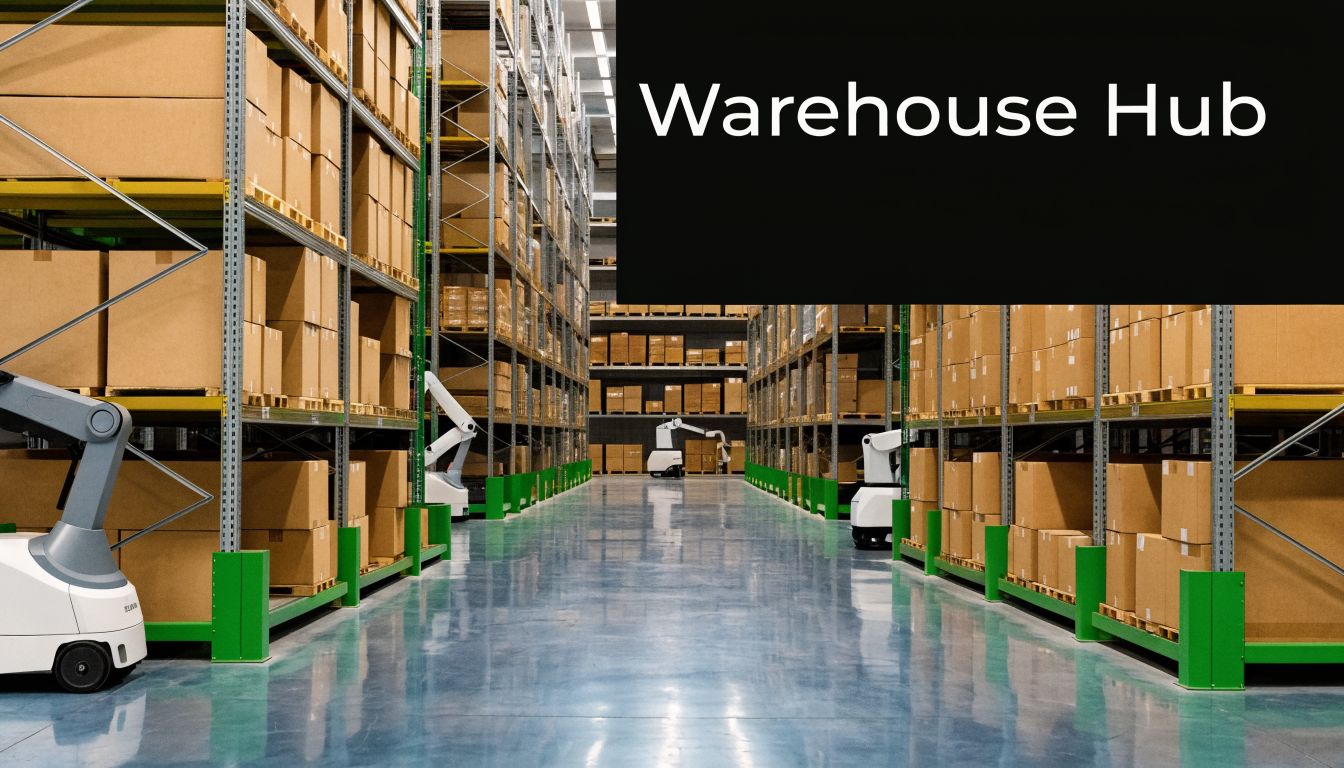
Storage is only the visible part. Modern warehousing includes receiving, checking, putaway, location control, stock rotation, cycle counting, replenishment, picking support, and dispatch staging. Each step affects the next one.
If inbound goods are booked in badly, the damage spreads fast. The wrong quantity enters stock, the wrong batch becomes available, or the wrong expiry date gets shipped. That isn't a minor admin issue. It creates downstream returns, customer complaints, and transport waste.
Good warehouses reduce that risk by being disciplined about process:
- Receiving accuracy: Goods are checked against the purchase order or transport paperwork before they become available.
- Location logic: Fast-moving stock sits where it can be picked quickly. Sensitive goods sit where they can be controlled properly.
- Stock integrity: Teams separate available, quarantined, damaged, and returns stock so order allocation stays clean.
What distribution adds
Distribution begins once goods are ready to leave the warehouse. It includes order release, picking, packing, manifesting, route planning, carrier handover, and final delivery coordination. If warehousing creates control, distribution turns that control into service.
A lot of businesses underestimate this handoff. They focus on transport rates and ignore dispatch readiness. But a cheap linehaul doesn't help if orders miss the vehicle because labels weren't applied correctly or pallets weren't built to the required standard.
One reason integrated planning matters is that the warehouse and transport team need the same operational truth. The dispatch team can't route efficiently if the stock status is wrong. The warehouse can't prioritise correctly if it doesn't know which orders are tied to fixed departures or timed delivery windows.
A short visual explanation helps show how tightly these functions connect in practice.
Fast fulfilment doesn't come from moving faster inside the building. It comes from removing unnecessary touches before the goods ever reach the loading bay.
Where businesses lose control
Problems usually appear at the joins between activities, not inside a single task. Typical weak points include:
- Poor inbound discipline: stock arrives but isn't made available correctly
- Disconnected systems: inventory and transport data don't match
- Weak dispatch planning: completed orders sit waiting because vehicle allocation happened too late
- No exception process: damaged, short, or non-compliant stock gets mixed into normal flow
When those joins are managed properly, warehousing and distribution services stop feeling like separate departments. They become one operating engine.
Choosing Your Ideal Warehousing Model
The right warehousing model depends on volume pattern, product profile, and how much control you need. Businesses often choose too early based on headline price, then discover the model doesn't suit peak season, customs complexity, or fulfilment mix.
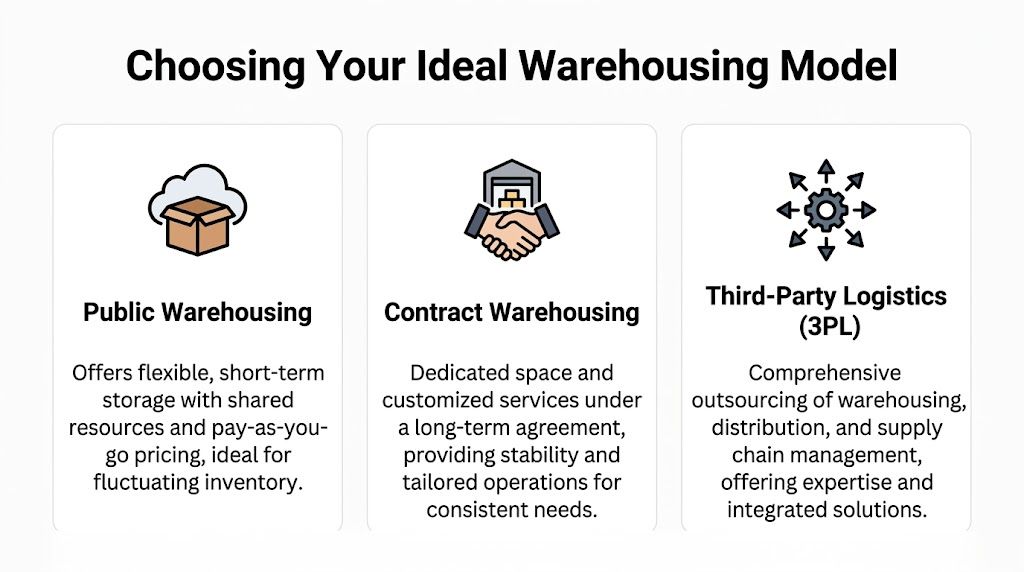
There are three common routes. Public warehousing gives you shared space and shared resources. Contract warehousing gives you a more dedicated setup under a longer agreement. 3PL or 4PL models go further by taking over execution, coordination, or both.
Public warehousing
Public warehousing suits businesses that need flexibility more than exclusivity. It works well for importers testing a new market, seasonal sellers, or firms with uneven inbound patterns. You pay for the space and activity you use rather than carrying the burden of a fixed facility.
The upside is agility. You can scale up during busy periods and avoid long commitments when demand is uncertain. The downside is that your operation shares labour, equipment, and physical capacity with other clients. That can be perfectly acceptable for straightforward stockholding, but less attractive if your goods need unusual handling, specialist labelling, or strict cut-off discipline.
Contract warehousing
Contract warehousing is a better fit when volume is stable and process design matters. The provider commits dedicated space, agreed service rules, and often a more customized operating model. Manufacturers with predictable replenishment cycles often benefit from this structure because the warehouse can be organised around their SKU profile and outbound pattern.
This model usually offers more consistency than public warehousing. It can also support more specific workflows, such as retailer routing guides, customer-specific packing instructions, or controlled returns segregation. The trade-off is reduced flexibility. If your forecast changes sharply, you may still be paying for capacity you aren't using.
3PL and 4PL models
A 3PL handles logistics execution. That can include storage, pick and pack, carrier management, outbound distribution, returns handling, and sometimes customs support. A 4PL sits at a higher level and manages the broader network, often coordinating multiple logistics providers and shaping the operating strategy.
For many importers and e-commerce brands, the more relevant decision is whether they need a provider that stores goods or one that can run the flow end to end. If your operation spans inbound freight, customs activity, order fulfilment, and final-mile or pallet distribution, a broader outsourcing model can remove a lot of internal friction.
The labour picture matters here. A 2025 UK Warehousing Association study cited by Jackson Lewis says 42% vacancy rates in logistics roles and 250,000 unfilled positions projected by Q1 2026, with e-commerce firms facing 25% order fulfilment delays. In that environment, flexible 3PL models with shared labour pools and automation can reduce the risk of service disruption.
Decision lens: If labour access, system capability, and operational discipline are harder to build in-house than to buy, outsourcing usually becomes a strategic choice rather than a tactical one.
Comparison of Warehousing Models
| Feature | Public Warehousing | Contract Warehousing | 3PL/4PL Provider |
|---|---|---|---|
| Commitment level | Shorter-term, flexible | Longer-term, structured | Varies by scope and network design |
| Space and labour | Shared | More dedicated | Managed as part of outsourced service |
| Best for | Variable demand, market testing, overflow | Stable volumes, repeatable processes | Complex supply chains, multi-step execution |
| Control | Lower operational control | Higher process control | Depends on scope, but often broader than storage alone |
| Customisation | Limited to moderate | Moderate to high | High when integrated services are included |
| Commercial logic | Pay for usage | Pay for dedicated capability | Pay for execution, management, or both |
One practical filter
If your goods need customs handling, specialist stock status control, or delayed duty treatment, the warehousing model can't be chosen in isolation. The customs setup changes the warehouse decision. That's why many importers review network design alongside options such as a bonded warehouse model, rather than treating storage as a standalone purchase.
What works best is usually the model that matches your volatility and your complexity. High volatility pushes you towards flexibility. High complexity pushes you towards integration. If you have both, the cheapest storage rate is rarely the smartest answer.
Essential Value-Added Services That Drive Efficiency
A warehouse becomes commercially useful when it does more than hold stock. The biggest gains usually come from services wrapped around storage. These are the activities that shorten handling time, reduce touches, improve outbound readiness, and stop errors from moving downstream.
The difference is easy to see on a live operation. One provider stores pallets and sends them out when asked. Another receives goods, checks them, relabels where needed, builds kits, routes priority orders, handles returns, and sends stock into the right delivery channel without delay. Both offer warehousing and distribution services. Only one is helping the business run better.
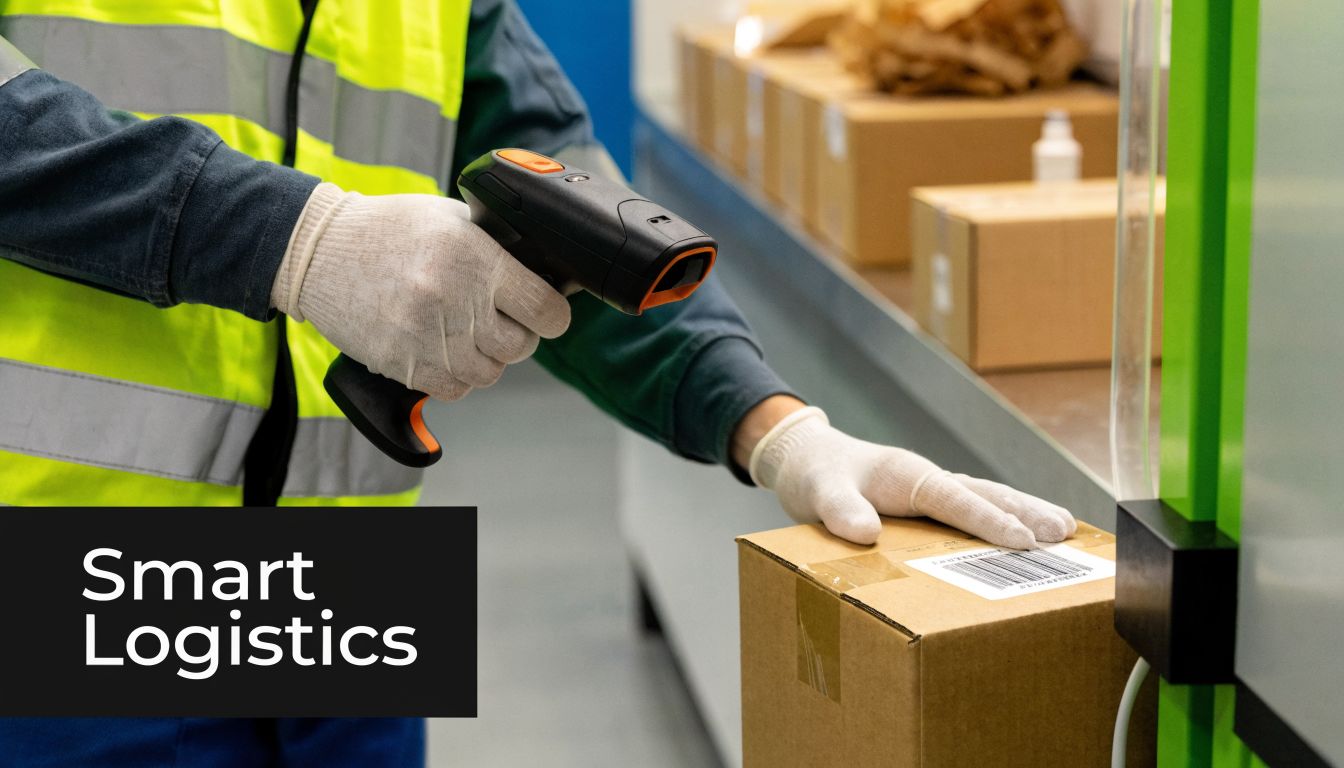
Picking and packing done properly
Order fulfilment fails when picking logic doesn't match order profile. A warehouse handling wholesale pallets needs a different method from one shipping mixed-SKU consumer orders. Zone picking, batch picking, and wave release all have their place, but the method has to fit the order shape.
For e-commerce brands, a common pain point is unnecessary touches. Stock gets moved too often, packing benches are badly laid out, and exception orders interrupt normal flow. A better operation separates fast movers, creates clear replenishment triggers, and applies packaging standards that match carrier rules and product fragility.
The goal isn't just speed. It's clean dispatch. Correct item, correct quantity, correct packaging, correct label.
Kitting, relabelling, and launch support
Promotional bundles, multi-pack assembly, retail compliance labelling, and market-specific inserts often create hidden internal workload. When those tasks stay inside your own business, they usually consume labour at the worst possible moment, just before dispatch deadlines.
Handled inside the warehouse, those tasks become part of the fulfilment design instead of a side process. That matters for importers launching products into the UK or EU with different label or documentation needs. A provider that can receive bulk stock, apply the right identifiers, and release customer-ready inventory removes avoidable delay.
One practical example is a seasonal product bundle. If the warehouse can pre-build the kit and hold it as a distinct SKU, the outbound team doesn't have to assemble it under time pressure once orders spike.
Cross-docking for fast-moving freight
Cross-docking is one of the clearest examples of value-added logistics. Goods arrive inbound and move quickly to outbound allocation with minimal storage time. That model is particularly useful for perishables, urgent replenishment, promotional stock, and shipments where dwell time creates cost or spoilage risk.
A simple scenario makes it clear. A pallet of chilled produce arrives at a hub in the morning. Instead of being put away into long-term storage, the goods are scanned, matched to outbound orders, and transferred to the next vehicle window. The warehouse still remains important, but as a synchronisation point rather than a stockholding site.
According to Distribution Technology on cross-docking hubs, UK distribution services using cross-docking can reduce inventory holding costs by 20-40% and cut delivery lead times by up to 48 hours, with dwell time minimised to under 24 hours when inbound freight is synchronised with outbound transport.
Cross-docking works when booking discipline is strong. It fails quickly when inbound arrivals are unpredictable or outbound allocation isn't ready before the vehicle reaches the bay.
That is why cross-docking is operationally demanding. It isn't a shortcut for poor storage capacity. It is a tightly managed flow model.
Returns and reverse logistics
Returns handling is where many warehouse setups reveal their weaknesses. Businesses often focus heavily on outbound speed and then improvise the returns process. The result is slow inspection, unclear stock status, and inventory that sits in limbo.
Strong reverse logistics separates returned goods into clear categories:
- Resaleable stock: can be checked and returned to available inventory
- Rework stock: needs cleaning, repacking, relabelling, or component replacement
- Quarantine stock: needs investigation before it can be released
- Non-saleable stock: must be disposed of, returned to supplier, or processed under agreed rules
This is especially important for online sellers balancing customer expectations with stock recovery. A fast return to inventory can protect margin. A messy process does the opposite.
Businesses reviewing service design often connect warehouse operations with final customer experience. That usually means assessing fulfilment and last-mile delivery services together, because a clean outbound process is only half the job.
What separates a useful partner from a basic provider
The strongest providers don't bolt these services on as extras. They build them into the operating model. They ask how your stock arrives, how orders are released, what exceptions occur most often, and where compliance checks belong in the flow.
That approach changes the economics of the warehouse. You stop paying only for space. You start paying for cleaner execution.
Navigating Compliance for Regulated Goods
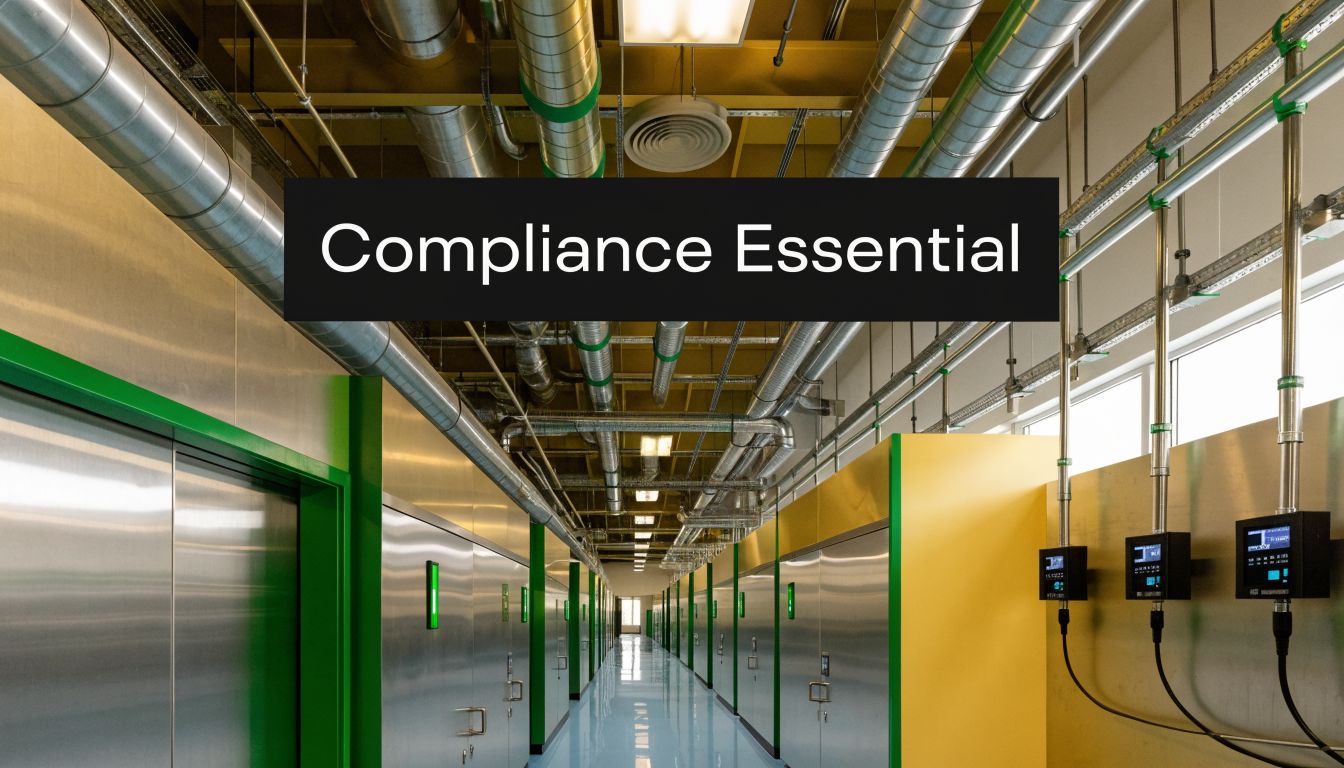
Regulated goods expose the gap between general logistics capability and sector-ready logistics capability. A standard warehouse may be perfectly adequate for dry consumer stock and still be the wrong environment for pharmaceuticals, chilled food, or goods that need customs and inspection coordination.
For these sectors, warehousing and distribution services have to protect both product integrity and market access. If either fails, the shipment may still physically move, but it won't move legally or commercially.
Pharmaceuticals and life sciences
Pharma logistics depends on discipline. Temperature control, batch traceability, stock segregation, and documented handling procedures all matter. Even where a product sits within a broad ambient profile, the warehouse still needs reliable controls over receipt, storage, access, and release.
The transport handoff matters just as much as storage. A well-controlled warehouse loses value if the outbound process breaks traceability, mixes batches incorrectly, or creates gaps in handling records. In practice, regulated sectors need one chain of custody across inbound, storage, picking, packing, and dispatch.
That is why provider selection in this space should focus on evidence of process control, not sales language. You need to know how stock is quarantined, how exceptions are investigated, how labels are verified, and how records follow the shipment.
Agri-food and perishable goods after Brexit
Agri-food operations face a different but equally unforgiving set of pressures. Shelf life keeps shrinking while border and inspection requirements remain demanding. If the warehouse can't support customs documentation, veterinary workflow, or cold-chain continuity, delay becomes expensive very quickly.
A cited analysis on post-Brexit warehouse and distribution centre challenges states that 68% of UK agri-food exporters report delays due to inadequate warehousing with integrated customs handling. The same source says only 22% of UK warehouses offer real-time veterinary inspection support, and spoilage rates for perishables can reach 15-20% in those conditions.
Those figures explain why ordinary storage isn't enough for many food movements. The warehouse has to function as part of the border-readiness process. Goods may need temperature-controlled holding, organised document presentation, inspection support, and rapid release to onward transport once clearance is complete.
If your goods can be delayed for compliance reasons, the warehouse needs to be designed for compliance, not just for storage.
What integrated handling looks like
For regulated goods, useful operating questions are specific:
- Can the facility segregate stock by status? Available, held, quarantined, inspected, and rejected stock can't blur together.
- Can the team support inspection workflows? That includes document readiness, sample handling, and controlled access.
- Does the outbound process preserve product conditions? Cold-chain goods, time-sensitive medicines, and restricted products need disciplined dispatch timing.
- Can customs and warehouse teams work from the same operational plan? If they can't, delays often occur after the goods have already arrived.
Integrated providers stand apart from storage-only operators. Some businesses use providers with customs support, veterinary coordination, and multimodal handling under one roof because that reduces handoffs across the journey. Multica Group is one example of a logistics provider that combines warehousing with customs clearance, documentation support, and veterinary inspection assistance as part of broader freight operations.
Businesses moving chilled, frozen, or other temperature-sensitive products also need to assess the provider's cold chain logistics capabilities alongside its general warehouse offer. A compliant cold room alone doesn't solve the problem if the intake, inspection, and outbound process aren't equally controlled.
Leveraging Technology for Total Supply Chain Visibility
Most logistics problems don't start with a lorry arriving late. They start much earlier, when nobody has a reliable view of stock status, order priority, or dispatch readiness. Technology closes that visibility gap when the systems are connected properly.
The warehouse management system, or WMS, is the core control layer inside the warehouse. It tells the operation what arrived, where it was stored, what can be picked, what is blocked, and what must leave next. Without that system discipline, the warehouse depends too heavily on memory, spreadsheets, or informal workarounds.
WMS and automation working together
The biggest gains appear when the WMS is linked to physical automation. According to Berger Allied on data-driven warehousing, integrating automated storage and retrieval systems with a WMS can reduce order picking errors by up to 90%, increase storage density by 30-50%, and lower labour costs by around 25% through round-the-clock capability.
Those gains don't come from robots in isolation. They come from structured decision-making. The WMS decides slotting logic, task priority, and stock status. The automated system executes movement with consistency. That combination is especially useful where SKU counts are high, pick accuracy is critical, or labour availability is unstable.
Visibility beyond the warehouse walls
Warehouse visibility isn't enough on its own. Distribution teams need the same operational truth once goods leave the building. That is where transport systems, carrier integrations, and vehicle telematics matter. If the warehouse knows an order is packed but the transport team can't see when it will be staged, route planning becomes guesswork. If the transport team changes a departure window and the warehouse doesn't know, orders miss dispatch.
A connected setup lets each system inform the next:
- The WMS confirms stock availability and pick completion
- The transport system allocates the right departure and carrier
- Telematics feeds location and ETA updates back into customer service and planning
- Exception alerts trigger intervention before service failure spreads
Good visibility isn't a dashboard with lots of colours. It's a shared operating picture that helps teams act early.
What to ask for in practice
When reviewing a provider's technology stack, ask simple operational questions rather than broad ones. Can the system show stock by location and status? Can it block non-compliant inventory from release? Can it prioritise orders by cut-off or service level? Can warehouse and transport milestones be viewed together?
Those answers tell you more than a software brand name ever will. The strongest warehousing and distribution services use technology to reduce ambiguity. Teams know what has arrived, what is available, what is delayed, and what action is needed. That is what real visibility looks like.
How to Choose the Right Logistics Partner
Choosing a logistics partner is less about who has the biggest warehouse and more about who can run your flow without creating hidden risk. The right provider should fit your goods, your trade lanes, your order profile, and your compliance burden.
A weak fit usually reveals itself in small ways first. Slow onboarding. Vague answers about systems. Unclear ownership of claims, shortages, or customs exceptions. Those are signs that the operation may look capable on paper but won't hold up under pressure.
Questions worth asking early
Start with the operating basics:
- Where are the facilities and transport links? The site has to support your inbound routes and your customer geography.
- What type of stock can the warehouse handle? Palletised freight, small-item fulfilment, temperature-sensitive goods, and regulated products all need different controls.
- How do systems connect? Ask how orders arrive, how stock updates flow back, and how exceptions are reported.
- What happens during peaks? A provider should explain how labour, space, and outbound capacity scale when demand rises.
- Who owns compliance tasks? Customs documents, labelling checks, inspection support, and traceability need named responsibility.
If the answers stay generic, keep pushing. Good operators can describe the workflow in plain language.
Look beyond the storage rate
Pricing needs careful reading. Some contracts charge mainly for space. Others build the commercial model around activity such as receiving, picking, packing, relabelling, pallet handling, and dispatch. Neither is automatically better. The issue is whether the charging logic matches your operation.
Three common approaches are worth reviewing:
| Pricing model | How it works | Best fit |
|---|---|---|
| Transactional | You pay by activity such as receipts, picks, labels, or dispatches | Variable demand and mixed order profiles |
| Cost-plus | You cover agreed operating costs plus management margin | More complex dedicated operations |
| Fixed-fee | You pay a stable periodic amount for defined scope | Predictable volume and steady service pattern |
A low storage rate can hide expensive handling charges. A fixed fee can look attractive until your product mix changes. Ask for sample billing scenarios based on your real order profile, not an average month that doesn't reflect how you trade.
Watch how they talk about accountability
You don't need a partner that promises perfection. You need one that measures performance clearly and reacts when service slips. At minimum, ask how they track order accuracy, stock integrity, dispatch timeliness, and delivery performance. Then ask what happens when those targets are missed.
A useful partner review often includes:
- Operational reporting: what you see daily, weekly, and monthly
- Exception handling: how shortages, damages, and delays are escalated
- Continuous improvement: whether they can point to process changes they've made for clients
- Sector fit: examples of handling goods like yours, with similar compliance demands
The best partner conversations feel operational, not theatrical. They talk about cut-off times, stock status, failed scans, and handoff rules because that's what real service depends on.
The final check is simple. Ask yourself whether this provider will reduce the number of moving parts your team has to manage. If the answer is no, the partnership may add cost without adding control.
Building Your Future-Proof Supply Chain
Resilient supply chains aren't built by accident. They are designed through good warehouse logic, disciplined distribution planning, clear compliance ownership, and systems that show what is happening before problems escalate.
That is why warehousing and distribution services deserve board-level attention. They influence delivery performance, stock accuracy, customer experience, and the ability to trade smoothly across regulated and cross-border lanes. For UK and EU operators, that link is even tighter because customs and inspection requirements can turn a minor process gap into a serious commercial issue.
Businesses that treat logistics as a strategic capability tend to adapt faster. They choose the right warehousing model, use value-added services where they improve flow, and work with partners that can connect storage, transport, and compliance into one operating system.
If your business needs warehousing and distribution services that connect storage, order fulfilment, customs handling, and multimodal transport, Multica Group offers practical support across UK, EU, Asia, and US trade lanes.