A pallet of chilled dairy can leave the EU in perfect condition and still arrive in the UK as a claims dispute. Not because the trailer failed, but because the goods sat at a Border Control Post, the paperwork didn’t match the load, or nobody could prove the cargo stayed within range during the delay.
This is what cold chain logistics entails in 2026. For UK importers and exporters, temperature control no longer sits in its own operational box. It now intersects with customs, veterinary clearance, route design, warehouse handling, and live shipment visibility. If one part breaks, the rest of the chain feels it immediately.
The businesses that handle this well don’t treat cold chain as “refrigerated transport”. They treat it as a controlled process from first loading decision to final delivery. That’s what protects shelf life, regulatory compliance, and margin.
Why Cold Chain Logistics is Mission-Critical for Your Business
A cold chain failure rarely starts with an obvious disaster. More often, it starts with a small operational compromise.
A driver arrives before the goods are fully conditioned. A pallet waits on a dock too long. A customs hold stretches past the safe buffer built into the packaging plan. A receiving warehouse opens the doors before the next bay is ready. Each step looks minor on its own. Together, they can turn a saleable load into waste.
For UK businesses, the risks are substantial because the country depends heavily on temperature-controlled supply. The UK imports approximately 46% of its food requirements, and in 2023 the country’s cold storage capacity reached around 5.5 million pallet spaces, a 15% increase from 2019 as operators responded to e-commerce demand and tighter inventory models, according to IMARC’s UK cold chain market overview.
That matters for food, but it matters just as much for life sciences. A shipment of biologics, vaccines, seafood, chilled meat, or speciality ingredients doesn’t get a second chance if handling goes wrong. The value is tied to condition. Once product integrity is questioned, the commercial problem becomes much bigger than the transport invoice.
Where the real pressure sits
Most clients feel pressure from four directions at once:
- Product sensitivity: Shelf life, efficacy, and food safety depend on maintaining the right range throughout the journey.
- Regulatory exposure: Temperature handling is now inseparable from documentary compliance and border procedures.
- Customer expectations: Buyers expect freshness, traceability, and reliable delivery windows.
- Cost risk: Waste, rejected deliveries, insurance disputes, and emergency rework often cost more than the freight itself.
A strong cold chain protects the product, but it also protects your ability to invoice without dispute.
The practical point is simple. If you import or export perishable or regulated goods, cold chain logistics isn’t a specialist extra. It’s a core operating discipline.
The Foundations of Cold Chain Integrity
An unbroken cold chain works like a relay race. The baton is the product’s required temperature range. Every handover has to be clean. If one runner fumbles the baton, the race is lost even if the rest of the team performed well.
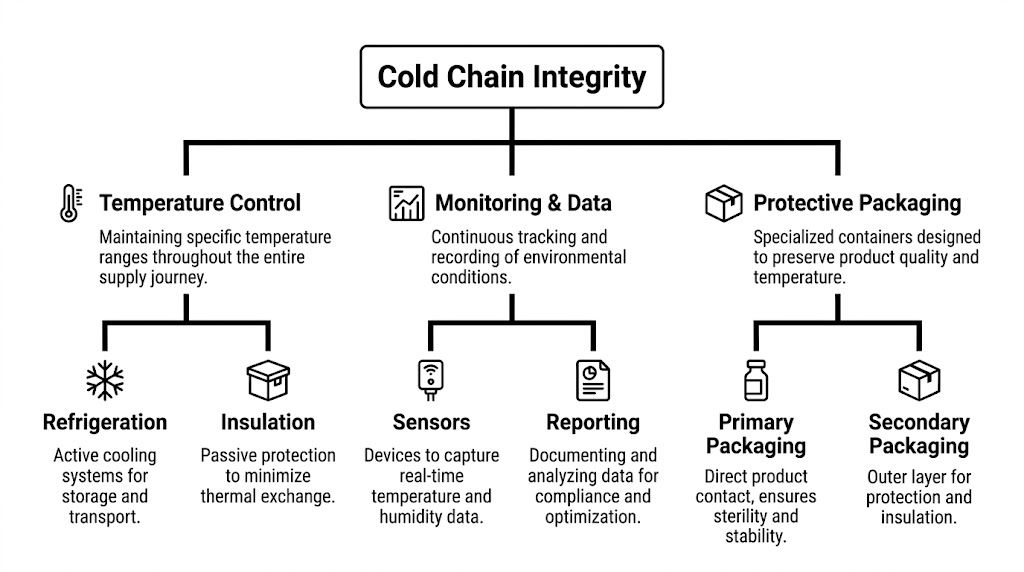
That’s why good cold chain logistics is never only about the truck or container. It depends on three linked controls. The right temperature. Proof that the temperature was maintained. Packaging that buys enough protection to survive normal disruption.
Temperature ranges have to be defined before loading
A surprising number of problems begin before the trailer doors close. Product owners assume the carrier will “keep it cold”, while the carrier assumes the cargo has already been conditioned to its target range. That gap creates avoidable failures.
In UK practice, temperature-sensitive goods are subject to strict control. Chilled meats must generally stay at 0 to 4°C, while frozen seafood must remain at -18°C or below, with tolerances not exceeding ±2°C, according to the GCCA best practice guide cited in the UK context. The same source notes that non-compliance during road transport contributes to up to 15% product loss for agri-food imports on EU trade lanes.
That’s the operational lesson. Refrigeration units maintain temperature. They are not designed to rescue warm product that was loaded late from production or staged incorrectly on the dock.
Integrity depends on control at each handoff
The chain usually breaks at transfer points, not while the vehicle is moving steadily.
Think about the common handoffs:
Production to dispatch
The product must already be at target temperature before loading.Dispatch to linehaul vehicle
Door-open time needs to be managed. So does pallet sequencing.Vehicle to border or customs inspection
Delays need a pre-planned response, not improvised calls.Arrival to storage or final delivery
The receiving site must be ready to accept the load immediately.
A temperature range written in a specification means very little if nobody manages exposure time in these moments.
Monitoring is part of product assurance
A compliant shipment needs evidence, not assumption.
Operators that do this well define the acceptable range in advance, place data loggers or live sensors in the right positions, and review the readings against actual events such as loading, waiting time, inspection holds, and delivery. If a receiver challenges a load, those records become the difference between a clean acceptance decision and a prolonged argument.
Practical rule: Don’t ask only, “Was the trailer set correctly?” Ask, “Was the product conditioned correctly, loaded correctly, and protected correctly during every pause?”
Packaging is your buffer, not your strategy
Protective packaging matters because transport never runs in ideal conditions. There will be door openings, waiting time, and handovers. Insulated systems and thermal packaging buy time when those normal frictions happen.
But packaging has limits. If the route design is poor, the documentation is wrong, or the load sits at the wrong point in the journey for too long, no packaging choice will fully compensate.
The strongest cold chain plans are the least dramatic ones. Correct pre-cooling. Clear load specifications. Measured handovers. Live data. Fast exception handling. That’s what keeps the chain intact.
The Key Components of an End-to-End Process
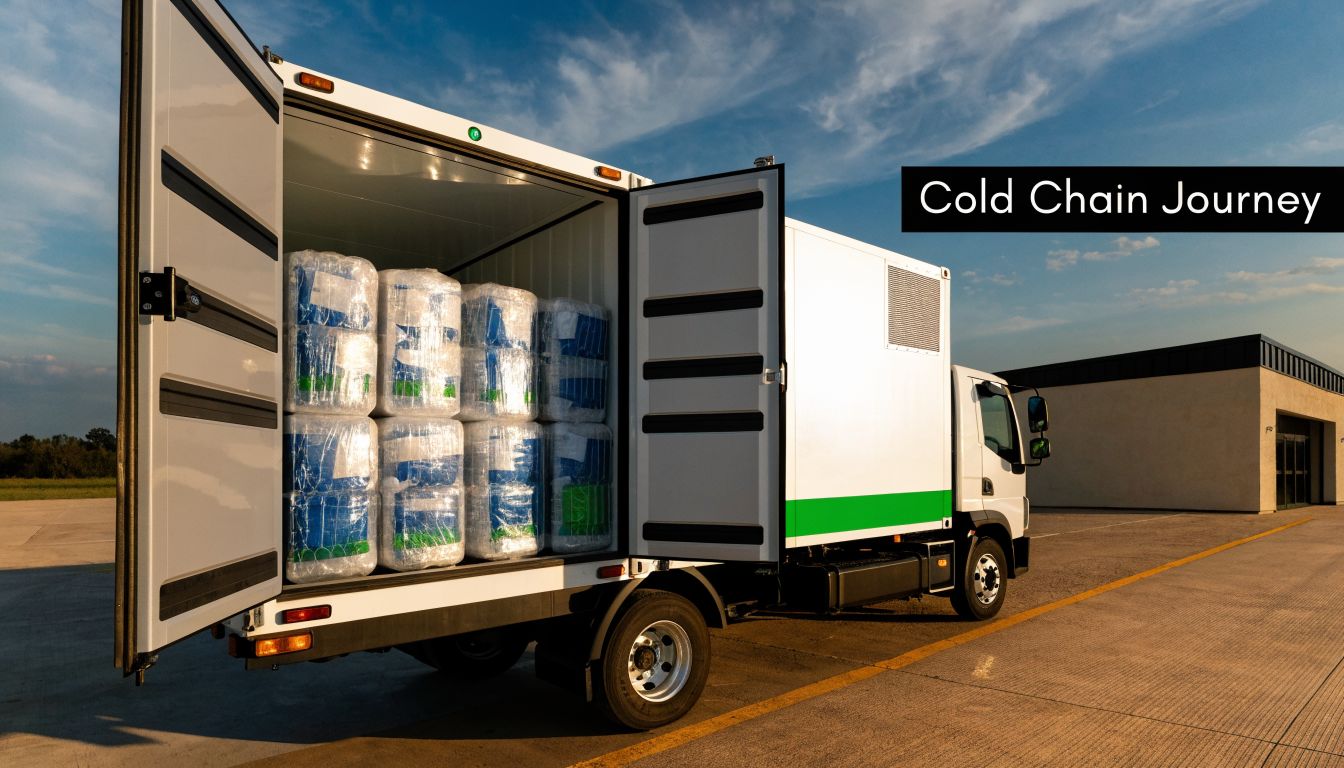
Cold chain logistics is built from physical assets and operational discipline. If either side is weak, the process becomes fragile.
The main components are straightforward on paper. Packaging protects the product. Transport keeps it moving within range. Warehousing preserves integrity between legs. In practice, each one has trade-offs that affect cost, risk, and flexibility.
Packaging choices shape how much disruption you can absorb
Not every shipment needs the same thermal protection.
Passive packaging uses insulation and refrigerants such as gel packs, phase-change materials, or dry ice. It works best when the transit profile is known, handovers are controlled, and shipment sizes are smaller or more fragmented. It’s common in parcel-style healthcare distribution and selected air freight moves.
Active packaging uses powered temperature control. This is the stronger option for high-value, long-duration, or tightly regulated shipments where the route includes more uncertainty. It costs more, but it gives operations teams more control.
The wrong decision usually shows up in one of two ways:
- The shipper over-specifies the packaging and pays for protection the lane doesn’t require.
- The shipper under-specifies it and leaves no time buffer when delays happen.
A practical review should look at journey time, handling points, inspection exposure, and the receiver’s tolerance for deviation. Packaging should support the lane design, not guess at it.
Reefer transport is only as good as its setup
A refrigerated vehicle or container looks simple from the outside. It isn’t.
The unit has to be correctly set, maintained, and matched to the cargo profile. Airflow matters. Pallet placement matters. Mixed loads matter. Pre-cooling matters. Drivers also need clear instructions on when to open, wait, or escalate.
UK infrastructure still creates real constraints. The British Frozen Food Federation reported that only 65% of domestic cold storage capacity meets EU Hygiene Regulations, and a 2025 Department for Transport study found that reefer truck energy consumption rises 30% during peak traffic, causing temperature fluctuations in 12% of consignments without predictive TMS routing, as summarised in this UK cold chain infrastructure analysis.
That’s why route planning can’t be separated from temperature control. If a reefer spends too long in stop-start urban traffic, the refrigeration load increases. If the site slot isn’t confirmed, dwell time grows. If the product is sensitive, those minutes matter.
Warehousing is where strong chains are preserved or weakened
Storage isn’t just “the place between vehicles”. In many operations, it’s where the load is most vulnerable.
Three warehouse functions deserve close attention:
- Temperature-zoned storage: Goods need the right environment immediately on arrival. Temporary staging in the wrong zone creates hidden exposure.
- Cross-docking: Fast transfer reduces dwell time, but only if bookings, labour, and outbound readiness are aligned.
- Order picking and consolidation: The more touches a load has, the greater the need for disciplined handling windows.
What works and what usually fails
The difference between an effective operation and a fragile one is often visible in a short site audit.
| Component | What works | What usually fails |
|---|---|---|
| Packaging | Lane-tested thermal design matched to transit profile | Generic packaging selected without route-specific review |
| Vehicle setup | Correct set-point, pre-trip checks, load spacing, airflow management | Warm product loaded into a cold trailer and assumed safe |
| Warehouse handling | Booked slots, temperature-zoned staging, fast handoff | Goods waiting on open docks for the next move |
| Cross-docking | Pre-planned inbound and outbound coordination | Pallets broken down without a timed transfer plan |
If you want fewer temperature claims, spend less time talking about “cold transport” and more time auditing every transfer point.
The process is end-to-end or it isn’t controlled at all.
Navigating Global Cold Chain Transport Options
Choosing the right mode isn’t only about speed or budget. In cold chain logistics, each mode introduces a different pattern of risk.
Road gives flexibility. Sea gives scale. Air gives urgency. None of them is automatically best. The right answer depends on the product’s stability, the route’s complexity, the handling environment, and what happens if the shipment is delayed.
Road transport
Road is usually the most direct option for EU-UK and domestic distribution. It gives better control over collection windows, route changes, and final-mile delivery timing.
That makes it a strong fit for:
- Retail replenishment
- Chilled and frozen food distribution
- Pharma movements that need controlled handovers
- Cross-border shipments where timing and paperwork need close coordination
The trade-off is exposure to congestion, driver-hour limits, booking delays at depots, and border queues. Road also creates more loading and unloading events than some shippers realise, especially in groupage or multi-stop networks.
Sea freight
Sea is often the best option when the load is larger, the lane is longer, and the cargo can tolerate a longer transit profile with stable temperature control.
It usually suits:
- FCL reefer moves for food ingredients and frozen products
- Intercontinental flows where cost efficiency matters more than maximum speed
- Planned replenishment rather than emergency stock recovery
The operational risk isn’t just transit duration. It’s port handling, cut-off discipline, terminal congestion, power continuity for containers, and delay at transhipment points. Sea works well when the product and planning model allow time. It works badly when shippers use it for goods that really need faster exception recovery.
Air freight
Air is the premium option for time-critical, high-value, or urgently needed stock. It can be the right answer for pharmaceuticals, specialist foods, and short shelf-life products where every day matters.
But air freight creates its own weak points. Airport handling can expose shipments during build-up, breakdown, screening, and waiting. “Tarmac time” is one of the most misunderstood risks in temperature-controlled air cargo. The flight may be short. The airport process around it often isn’t.
That’s why air only works well when the ground process is as tightly managed as the flight booking itself.
A practical comparison
| Mode | Speed | Cost | Typical Risk Factor | Best For |
|---|---|---|---|---|
| Road | Fast on short and regional lanes | Moderate | Congestion, border holds, multiple handoffs | EU-UK distribution, final delivery, flexible routing |
| Sea | Slowest | Lowest for larger volumes | Port delays, long transit, terminal handling | Bulk and planned intercontinental cold chain flows |
| Air | Fastest | Highest | Airport exposure, handover sensitivity, booking dependency | Urgent, high-value, time-critical shipments |
Multimodal usually beats single-mode thinking
Many failures happen because businesses choose a mode in isolation.
A better question is this. Which combination creates the most reliable temperature-controlled journey from origin to consignee? That may mean road to airport, air for the long leg, then dedicated temperature-controlled final delivery. Or it may mean road to port, reefer sea freight, then cross-dock and onward road movement.
A useful reference on designing these combinations is Multica’s article on multimodality in practice and how to effectively combine road, rail and sea transport.
The cheapest mode on paper can become the most expensive choice if it adds one uncontrolled handover too many.
When mode selection is done properly, the transport plan reflects the product, not the carrier’s standard template.
Mastering Compliance and Risk in a Regulated World
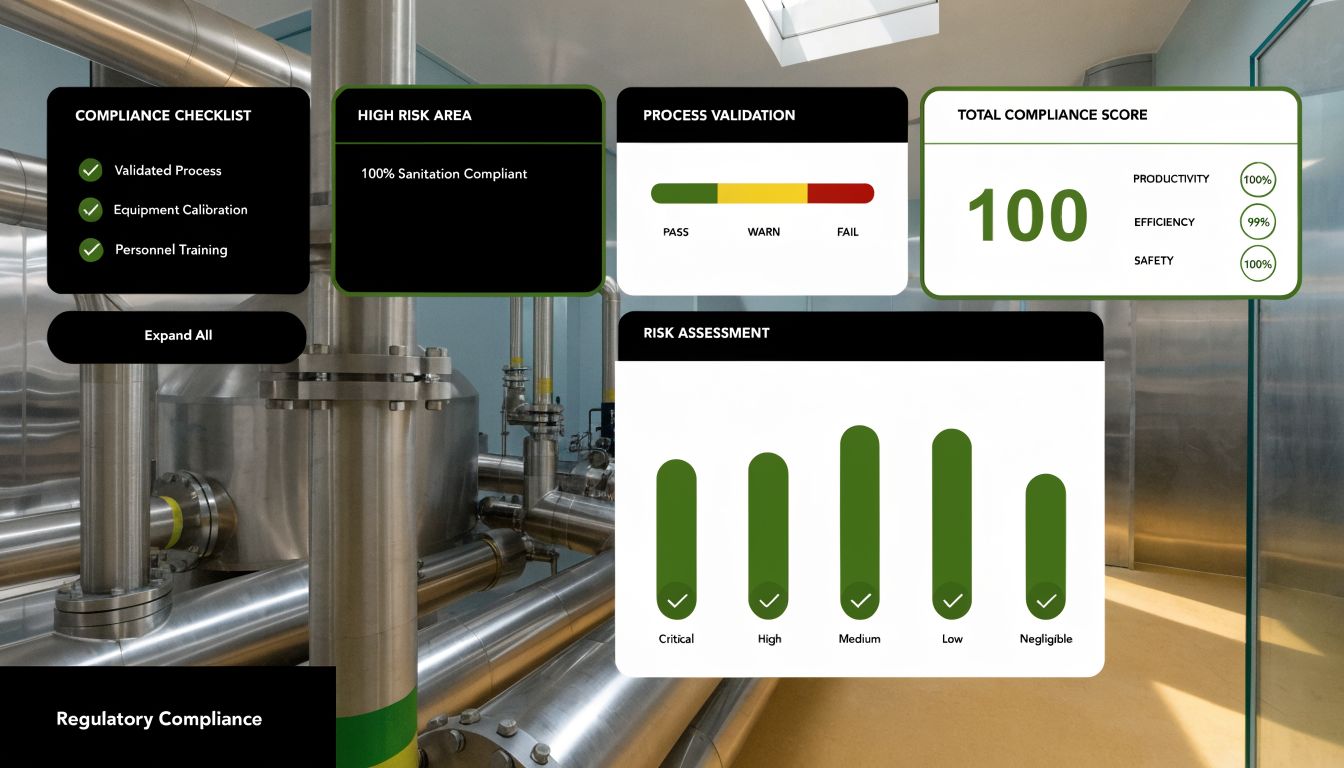
Compliance in cold chain logistics isn’t a final paperwork check. It shapes the operating model from the first booking.
That’s especially true on UK lanes where product condition, customs accuracy, and veterinary or sanitary controls are tightly connected. A load can be physically sound and still fail commercially if the documents are wrong. It can also be legally compliant on paper and still become unsaleable if the temperature record doesn’t hold up under scrutiny.
Pharma and food face different controls, but the discipline is similar
For pharmaceuticals, operators focus on controlled handling, documented chain of custody, calibrated monitoring, and procedures that support Good Distribution Practice. For food and agri-food, the focus expands to sanitary and phytosanitary requirements, commodity-specific certificates, border presentation, and inspection readiness.
The mistake many businesses make is treating these as separate worlds. Operationally, they overlap. Both require:
- Clear temperature specifications
- Defined handling procedures
- Accurate transport documents
- Evidence that the product remained within acceptable conditions
- Escalation rules when delays or deviations occur
That’s why strong SOPs matter more than generic promises of compliance.
Veterinary clearance is now a core cold chain issue
Many post-Brexit articles become too abstract on this issue. In real operations, veterinary clearance isn’t a side issue for agri-food shipments. It’s one of the main factors affecting cold chain reliability on EU-UK routes.
UK importers of perishable goods face mandatory veterinary inspections at Border Control Posts. APHA data showed average delays of 24 to 48 hours in 2025 for high-volume EU lanes, and a 2025 UK Cold Chain Federation report noted that 15% of spoilage incidents are linked to these holds, according to this review of post-Brexit cold chain bottlenecks and BCP delays.
That single fact changes route planning. If a lane is exposed to inspection delay, the transporter has to plan for:
- Enough thermal protection and fuel resilience
- Documentation accuracy before departure
- Correct pre-notification
- Fast communication between driver, broker, customs team, and consignee
- A contingency if the unit is held longer than expected
If those controls aren’t built in, the border becomes a spoilage event waiting to happen.
Documentation errors create physical risk
A common misconception is that documentary problems are administrative only. They aren’t.
When the goods stop moving because commodity codes, health certificates, quantities, or load references don’t align, the temperature-controlled operation becomes harder by the hour. The reefer still runs, but the margin for error shrinks. Drivers wait. Inspection windows slip. Delivery appointments are missed. Receivers may no longer accept the load on the original slot.
For businesses moving agri-food goods through French and wider EU-facing border processes, Multica’s guidance on veterinary, sanitary and phytosanitary controls for goods imported from the United Kingdom to the European Union via the French border gives useful operational context.
Risk control has to be written down and rehearsed
The best cold chain teams don’t rely on experienced staff “knowing what to do”. They document it.
A workable SOP set usually covers:
Pre-shipment checks
Product temperature, packaging readiness, set-point confirmation, document match, booking status.Loading rules
Door-open limits, pallet order, sensor placement, seal management, escalation if cargo isn’t conditioned.Delay response
Who gets called, who authorises diversion, what happens if a border hold extends, where the nearest compliant facility sits.Arrival and exception handling
How the receiver checks data, what triggers quarantine, and who decides product disposition.
Compliance only helps if operations can execute it under pressure.
What good operators do differently
They assume disruption will happen. Then they design for it.
That means they don’t build a route that only works if every crossing, warehouse slot, and inspection runs perfectly. They build a route that remains compliant and thermally stable when the shipment meets the friction that’s now normal in EU-UK trade.
Leveraging Technology for Visibility and Control
Good operators used to find out about temperature problems at delivery. By then, the argument had already started.
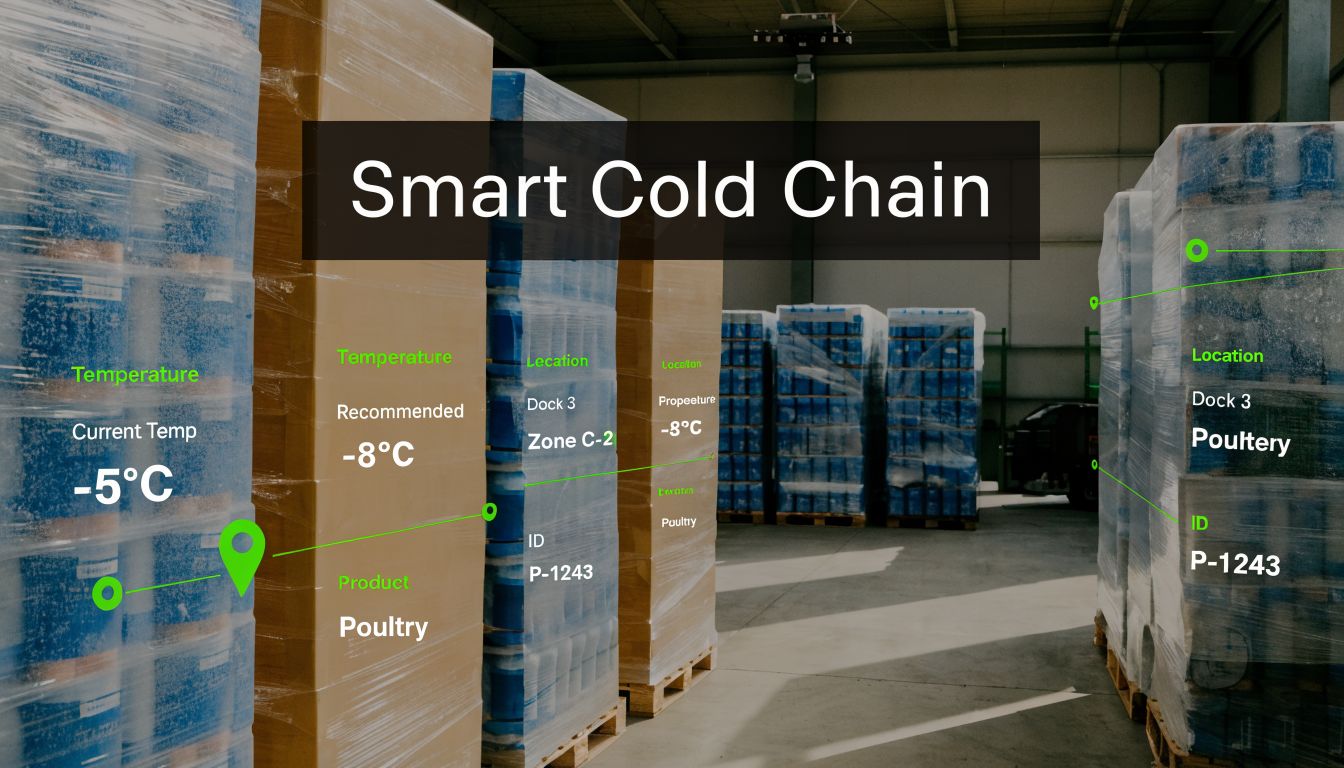
Modern cold chain logistics works differently. The goal is to detect drift early enough to act while the shipment is still recoverable. That’s where visibility technology earns its keep.
Monitoring should change decisions, not just create records
A logger that gets opened after delivery is useful for investigation. It isn’t enough for control.
Live telematics, GPS-linked sensors, and connected data loggers give operators a chance to intervene during the journey. If the return air temperature starts drifting, if a route delay extends dwell time, or if a vehicle stops unexpectedly, the team can escalate while there’s still time to reroute, contact the site, or prepare a priority unload.
That level of monitoring has become mainstream in UK pharma operations. The 2021 National Cold Chain Strategy invested £200 million in IoT-enabled monitoring, reducing temperature breach incidents by 28% across 1,200+ facilities by 2024. In 2023, 75% of pharma shipments used reefer containers and temperature-controlled HGVs, preventing losses estimated at £300 million annually, according to Roots Analysis on vaccine and pharma cold chain logistics.
The practical takeaway is clear. Technology is no longer optional for regulated or high-value lanes.
The most useful KPIs are operational, not decorative
Dashboards often collect too much and clarify too little. A few cold chain metrics matter more than dozens of generic transport indicators.
Focus on measures that drive action:
- Time in temperature range: Did the product remain within its specified band for the entire move?
- Excursion frequency: How often do shipments breach alert thresholds?
- Response time to alerts: How quickly did the team react once a risk appeared?
- Dwell time at transfer points: Where is exposure increasing between legs?
- On-arrival acceptance rate: How often does the receiver accept without condition dispute?
If a KPI doesn’t trigger a process decision, it’s reporting noise.
Digital paperwork matters too
Visibility isn’t only a sensor question. It also depends on document flow.
If the transport team sees location data but the customs team doesn’t have the final veterinary paperwork, the shipment still gets stuck. If the carrier has the set-point record but the consignee can’t access the temperature history quickly, disputes drag on longer than they should.
That’s why digital freight administration matters. Multica’s article on the digital revolution in transport logistics, including e-CMR, eFTI and EDI is a useful reference for the administrative side of end-to-end visibility.
A short explainer helps illustrate how operators use these tools in practice.
Technology also controls cost, not just risk
Cold chain budgets are shaped by fuel, refrigeration energy, specialist equipment, labour, storage, and failed deliveries. Better visibility helps control all of them.
For example:
- Predictive maintenance reduces the chance of unit failure during transit.
- Route optimisation cuts unnecessary dwell and idle time.
- Warehouse slot visibility reduces queueing at temperature-sensitive handovers.
- Digital records shorten disputes and speed release decisions.
The best cold chain systems don’t just tell you what happened. They help your team decide what to do next.
That’s the difference between data collection and operational control.
Implementing Your Cold Chain Strategy with Multica
A workable cold chain strategy needs more than a carrier with refrigerated equipment. It needs a partner that can manage handovers, border complexity, and exception handling across the full route.
When assessing a provider, start with the parts that usually fail under pressure.
What to look for in a logistics partner
Check these points early:
- Multimodal capability: If road, sea, and air options sit under separate providers with separate data, the handovers become harder to control.
- Customs and documentary competence: Cold chain reliability drops quickly when the border process is treated as an afterthought.
- Veterinary and SPS understanding: On agri-food lanes, this is operationally critical.
- Owned assets and visibility tools: A modern fleet and telematics improve control when routes change or delays hit.
- Warehousing and cross-dock support: Storage, order picking, labelling, and transfer handling matter just as much as linehaul.
What implementation should look like
A serious provider won’t start with a generic rate card. They should map the product, lane, handling points, and compliance risks first.
A practical onboarding process usually includes:
- Review of product temperature requirements and packaging assumptions.
- Assessment of route options across road, sea, and air.
- Documentary workflow planning for customs and regulated goods.
- Definition of monitoring, escalation, and reporting requirements.
- Alignment of warehousing, delivery windows, and consignee acceptance procedures.
That approach matters because your risks are rarely limited to transport alone. They sit across origin handling, border movement, storage, and final delivery.
Why Multica fits this model
Multica Group is built for businesses moving goods across Europe, Asia and the United States with a need for joined-up control. Its model combines road, sea and air services with in-house customs clearance, documentation management, support for veterinary inspections, warehousing, cross-docking, labelling, order picking, and distribution.
That combination solves a real problem. It reduces the number of separate parties trying to manage one sensitive shipment. It also gives importers and exporters a clearer operational chain when the load needs fast intervention.
A fully owned truck fleet, advanced telematics, and 24/7 support are especially useful in cold chain work because delays don’t wait for office hours. When a shipment is time-critical or regulated, responsiveness matters as much as capacity.
If your business is reviewing how to tighten EU-UK or intercontinental cold chain flows, the right next step isn’t to buy more transport in isolation. It’s to redesign the full process with a partner that can control the route, the data, and the compliance burden together.
If you need a logistics partner that can handle temperature-sensitive freight, customs complexity, and multimodal coordination in one place, talk to Multica Group. Their team supports importers and exporters across Europe, Asia and the United States with end-to-end transport, in-house customs clearance, veterinary support, warehousing, and real-time visibility.